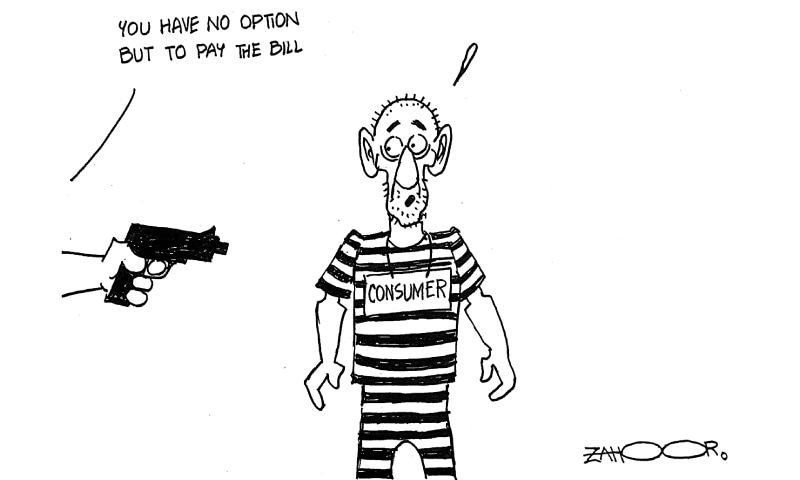
Pakistan’s complete economic meltdown is in progress with the currency market being the prime indicator of how quickly things are spiraling out of control. Pakistan’s currency has gone from 100 to 1 USD to 305 in a matter of six years with open market trading at more than 340. This has fuelled a storm of inflation with petrol, energy, food, medicine, and cars showing more than triple increases in price which has destroyed the livelihood of a vast majority of the population. Inflation for the past two years has reached the highest level in the recorded history of the country and there is no respite in sight with the currency continuously crashing in the open market as well as consistent decline in interbank. The difference between the interbank and open market is now more than 10% and the month-on-month decline is more than 7% since the current caretaker setup took charge. The increase in interbank is due to the IMF condition of no import restrictions which the previous PDM government had imposed by linking access to dollars for import with export. This had incentivized several industries to increase exports in order to access dollars for imports leading to a continuous current account surplus for four consecutive months until July this year. With import restrictions gone July and August saw roughly 8 billion dollars of imports combined and this created pressure on the rupee leading to its fall from around 280 to 305 in interbank. The situation in the open market however is far more dangerous since the dollar has become a speculative asset now. Everyone is trying to buy the dollar as they believe its price is set to increase since the state bank and finance ministry can no longer intervene directly as they had under the previous government as per IMF conditions. This fuels demand for dollars in open market and hence it becomes a self-fulfilling prophecy leading to another cycle of dollar buying for speculative purpose which again leads to more depreciation. Smugglers are also increasingly buying dollars for the purpose of smuggling sugar, wheat, rice to Afghanistan. With international prices of these commodities increasing, mill owners are interested in exporting their produce abroad both legally and illegally to increase their earnings. This has created a great surge in demand for dollars to carry out these transactions which is further appreciating USD in open market. Simultaneously it has also caused massive surge in prices of sugar, rice and wheat in the local market since most of the produce having been moved abroad, now has to be imported at a higher price for local use. The need to import also increases demand for dollars which again feeds in to the cycle of devaluation and inflation. Lastly both smugglers and speculators have easy access to rupee via the 9 trillion cash currently in circulation in the country. This represents more the 30% of the total money supply of the financial system allowing hoarders and smugglers to pay ever higher rates for dollars thus leading to a complete collapse of the rupee in open market. Increasing interest rates which is what state bank has been using in order to convince people not to buy dollars but keep money in banks is ineffective as a strategy since for a smuggler it doesn’t matter how much banks pay him from savings accounts he needs dollars at all costs for his operations. Same goes for hoarders who believe they can get more return via dollar transactions then banks deposits. Instead this policy of high interest rates has greatly increased debt and interest payments which the government has to make to domestic and international borrowers leading to further government borrowing to plug the gap which in turn fuels more inflation. Increasing interest rates also reduces borrowing by the private sector and increases cost of doing business which in turn leads to unemployment, low wages and further inflation. It hinders expansion of existing businesses which especially in-turn leads to a shrinking manufacturing sector thus decreasing the country’s exports. This again fuels a large current account deficit which in turn leads to further depreciation of currency again trapping the nation in a vicious cycle. Breaking out of this vicious cycle requires concrete steps on an urgent basis. Firstly demonetization of the five thousand rupee currency note needs to be carried out. This will ensure that cash lying outside formal banking channels either enters said channels or is removed from the financial system so that it isn’t available for dollar hoarding and smuggling. Alternatively it will also boost tax collection since the informal sector of the economy will be formalized leading to lower budget deficit for the government which in turn will reduce borrowing and thus the interest rate and boost the private sector . This will lead to increased industrial activity which will boost exports and help maintain current account surplus and prevent further devaluation and inflation. Secondly all foreign currency transactions should be via bank branches rather than currency exchanges. Currency exchanges may bring in foreign USD and take a percentage charge for generating new inflows but all USD should be placed with state bank and commercial banks and they should be responsible for providing dollars to importers and locals within the proscribed limits. This will prevent hoarders and smugglers from accessing dollars and ensure exchange rate stability. Lastly, the old policy of importing equivalent to export proceeds needs to be readopted and the IMF is convinced of its necessity since this ensures we have surplus dollars available with state banks for debt repayments and honoring local demand close to interbank rates. If certain steps are not undertaken at the earliest it is feared that Pakistan may soon see dollarization of its economy much like Lebanon Argentina and Turkey are seeing at the moment with prices of all goods spiraling out of control leading to anarchy and societal collapse. Pakistan will cease to exist as a viable state even though right now it is barely one. The vicious cycle needs to be stopped at all costs and soon.
Along with Inflation, the ever-increasing costs of electricity and petrol outraged the public. Is political unrest bringing economic chaos? Who is responsible for sky-rocketing prices? Are the leaves at the top quenching thirst by depriving beneath? Or does the government fail to govern? The growing prices have touched on the raw and public exalted protest nationwide. People are on the roads for days over the surge in electricity and petrol prices. These never-ending challenge to the state was a sign to bring civil unrest. Owing to the public rage, the interim Prime Minister called an emergency meeting on the 26th of August where all stakeholders participated. To control the difficulty for the public, the Ministry announced the discontinuation of free electricity provision to officers of power distribution. The burdensome responsibilities have deprived not only low but also middle-income families of their livelihoods. These citizens contribute more than one-third of the population but their wages range from 20 to 50,000 might not be worth living. People live from hand to mouth but have to pay their bills.

This has happened because of three main reasons including sick politics, delayed reforms, and the endless greed of Mafiya. Like, a Major chunk of tariffs as capacity payments to IPPs, whether or not they make any electricity. This raises the question here Where are the promises of politicians? Are they men of words but not actions? Or is it only a power game for them? The foremost responsibility of the state is to serve the needs of the public. The slogans at the time of elections remain behind. When the point comes to providing basic needs (food, health, education, and shelter), the budget is rundown. But if the true motive of Government is to retain the public, there will be a way. Political leaders are more concerned with defaming opponents whereas state and public matters remain in question. The political unrest in past years has brought internal and external economic imbalance. This instability, of course, not only impacts the internal structure but is also a threat to the integrity of the country. The revival of political and economic uncertainty is urgent otherwise rising controversy will provoke to severe dilemma. The caretaker government should be replaced by an electoral government because the state is not for the trials of state actors. Instead of pointing fingers at one another, and keeping personal concerns aside, state officials should make unbiased decisions.
Introduction:
The alarming rise in rape cases in Pakistan has ignited a nationwide debate and raised concerns among various stakeholders. Understanding the multifaceted reasons behind this troubling trend is crucial for formulating effective strategies to combat it. Rape is a heinous crime that devastates the lives of victims and their families. In this blog, we will delve into some of the complex factors contributing to the increased ratio of rape in Pakistan.
Patriarchal Society:
Like many other countries, Pakistan, grapples with deeply ingrained patriarchal norms and values. The societal structure often reinforces male dominance and perpetuates gender inequality. This power dynamic can manifest in the form of sexual violence, where perpetrators believe they can exert control over women’s bodies with impunity. Addressing this issue requires a comprehensive effort to challenge and transform the patriarchal mindset.
Economic Disparities:
Economic disparities in Pakistan are another factor contributing to the rise in rape cases. Poverty and lack of opportunities can make individuals vulnerable to exploitation and sexual violence. Women and girls from marginalized communities are particularly at risk. Providing equal access to education and economic opportunities can empower individuals and reduce their vulnerability to rape.
Inadequate Legal Framework:
Pakistan’s legal framework for addressing sexual violence has been criticized for being outdated and inadequate. Gaps in legislation, such as the absence of comprehensive sexual harassment laws, can hinder the prosecution of perpetrators and discourage victims from reporting incidents. Reforms in the legal system, along with better implementation, are essential to ensure justice for survivors.
Limited Awareness and Education:
A lack of awareness and comprehensive sex education can contribute to the problem. Many individuals, especially in rural areas, may not fully understand the concept of consent or the consequences of sexual violence. Comprehensive sex education can play a vital role in raising awareness and teaching young people about healthy relationships and consent.
Stigma and Victim Blaming:
The stigma associated with rape and sexual assault in Pakistan can deter survivors from reporting incidents. Victim-blaming attitudes are prevalent, and survivors often face social isolation and discrimination. Changing societal perceptions and supporting survivors through counseling and legal assistance are crucial steps in addressing this issue.
Ineffective Law Enforcement:
Inefficient law enforcement and a lack of trust in the police force is also a main factor to the increased rape ratio. Victims may fear retaliation or face difficulties in filing complaints. Strengthening law enforcement agencies, improving their responsiveness, and ensuring that they take sexual assault cases seriously are essential steps in addressing this problem.
Cybercrime and Online Harassment:
The digital age has brought new challenges, including Cybercrime and online Harassment. The use of technology to harass and exploit individuals has become a growing concern. Effective legislation and law enforcement measures must be put in place to combat cyber-related sexual offenses.
Conclusion:
The increased ratio of rape in Pakistan is a deeply troubling issue that requires a multi-pronged approach to address. It is essential to challenge patriarchal norms, promote gender equality, and create a society where sexual violence is not tolerated. Additionally, reforms in the legal system, education, and awareness programs, along with better law enforcement, are necessary to protect the rights and dignity of women and girls. Ultimately, it will take the collective efforts of government, civil society, and individuals to combat this grave issue and create a safer environment for all.
At dusk on Friday, in a hotel in Lahore (where Quaid E-Azam used to stay), guests were arriving in the hallway. As usual, the late inauguration of our events arises when people like us are prompt on time. When I entered the corridor along with my dear student, Sheraaz Ali Khan, I found my two collegiate friends talking cautiously. Anyway, I advanced towards them, one TV compere, Anwar-ul-Haq, who gives wisdom talk about books, and another, Amjad Wattoo, an old actor in the industry but currently the spreading light in the divine city. They met genuinely. Anwar-ul-Haq started talking in my columns, while I kept seeing Amjad Wattoo and reflecting on the past. That is the same young man who was an active member of the Dramatic Society of GCUL but is now serving the Devine retainers in the city of God. How the two Pakistanis settled abroad while sitting on a bench after an ending delicious meal, met Amjad Wattoo, how the assistance mounted, how the lady from Narowal living in Saudi Arabia offered her big contribution to the services, Amjad Wattoo told this narrative in a moment. He is inspired by prisoner No. 804, taking from him the spirit or services Amjad Watto came back otherwise, along with his brothers, he had settled in Britain; patriotism pulled him back. In this love, the warmth of assistance was added, and now kindness has gained the rank of more love than love. Since the beginning of education, it was decided to name this project “Noor” (Light), and then many areas of life were added to the Noor Project where services were required. Just read the details of these projects so that you can get an idea of where the Divine Retainers have cast their services. The ceremony began in the name of Allah, the national anthem was read, and then Noor ul Hassan presented his words in the light of wisdom. There was a lot of applause for a long time when Amjad Wattoo was called on stage and talked in detail about the Noor projects. In his address, Amjad Wattoo said, “I am grateful to God first; I would like to mention all my members here. Currently, about 130 staff members are contributing to this noble cause. A 60-bed hospital is being built for $5.2 million, which includes treatment of all types of patients. At present, a sum of $2.2 million has been collected through fundraising. We are bringing foreign exchange all over the world and spending it on the needy in the City of God. In addition, a dialysis center is going to be set up. We have the entire responsibility of educating 600 children and girls. 25 pretty girls play hockey at the National Hockey Stadium, and it is compelling that 14 of them are going to play for Pakistan Under-14. They will represent Pakistan. Our school girls won 15 Gold Maedels in Judo Karate; it is a great honor not only for us but for the whole of Pakistan. I have given all my assets to this project. One day I thought that the poor man’s first need was bread, owing to this need, 3 years ago, I opened an oven and put 200 loaves of bread in a box with it and said that if any poor man came here, he should be given free. Od the Exalted has blessed it, and when the service is blessed by the one who blesses it, the chain is widened. Today, 3 years later, on behalf of us, 780 ovens are working in Lahore. From these ovens, about 3-5 lakh rotis feed people every month. I am glad to say that goodness is alive in our people. I put the money once in the box next to each oven, and I found no need to put money again. I have no idea which angel is putting his services into this work. My dear countryman! We are giving technical education to children, In this regard, 10 courses, including Amazon, Web Design, and Graphic Design, are being taught. The number of courses will be increased after the building is built. Based on our dedication to serving humanity, I am saying that we will provide 6,000 skilled children to the world every year.
Translation by Muniba Kiran
A statement by Al-Qaeda in the guise of “The World Islamic Front for Jihad against the Jews and Crusades” in February 1998 said it was the duty of all Muslims to kill US citizens and their allies everywhere.
Qaeda-ul-Jihad is a Sunni Islamic extremist group established in the 1990s during the Soviet-Afghan War. Al-Qaeda was founded by Osama bin Laden, his close associates, Arabs, and other foreign affiliate Muslim groups for an active revolt against the Soviets in Afghanistan. Al Qaeda, as an Islamist organization, established its headquarters in the early 1990s in Sudan, was revived later in Afghanistan, and has camps in several other countries.
The group strongly aimed to support Islamic causes in conflict and defend Muslims from foreign occupying powers. The rise of desperation among the hundreds of people in the Middle East and South Asia because of missile attacks, killing ordinary citizens, The organization obtains worldwide access by providing millions to fund logistics, militant training, and tactical abilities for jihadists. The Muslim Jihadist group declared a holy war against the West, primarily targeting the United States, where the first Gulf War and drone attacks became the catalyst.
Al-Qaeda conducted attacks in series, including a bombing in 1992 at a hotel in Yemen that was claimed later by Laden and a truck bombing in 1993 in the underground garage of the World Trade Center by Ramzi Yousef (who had trained under Al-Qaida’s camp). Simultaneously, in August 1998, attacks on American Embassies in Kenya, Nairobi, Dar es Salam, and Tanzania, killed 224 people and left more than 5000 injured. Furthermore, the successful bombing of the U.S. Navy destroyer with the U.S. Cole’s bombing in October 2000, killed 17 sailors.
In 1999, Al-Qaeda was designated as a Foreign Terrorist Organization (FTO) and Counterterrorism (CT) operation conducted by the U.S. In June 2001, the group merged with Egypt’s Al-Jihad.
In the most destructive attack on September 11, 2001, four U.S. Jet Airlines hijacked and crashed—two into the Twin Towers, destroying the World Trade Center in New York City, the third strike into the Pentagon, and the fourth plane crashed in the field of Pennsylvania, killing 3000 people overnight.
President Bush announced the War on Terror while addressing Congress on September 20, 2001, saying, “Our war and terror begin with Al-Qaeda, but it does not end there. It will not end until every terrorist group of global reach has been found, stopped, and defeated.”
Laden became the most wanted man after 9/11 and the U.S. Naval SEALs took ten years to trace and kill him in Abbottabad, Pakistan, on May 2, 20011. Elliott Abrams said, “Bin Laden’s death helps the drive for democracy in the Middle East and weakens the influence of Al-Qaeda in the Arab world.” Ayman Al-Zawahiri, an Egyptian deputy of Al Qaeda, claimed responsibility for the bus bombing in the United Kingdom in July 2005. Al-Zawahiri, one of the masterminds behind 9/11 and several other attacks, became Laden’s successor. But the failure to attack inside America seemed to downplay Al-Zawahiri as compared to Osama bin Laden’s Charismatic.
The United States’ invasion of Iraq in 2003 increased the affiliate group of Al Qaeda in the Middle East, South Asia, and North Africa. Al-Qaeda in Iraq (AQI), the first affiliate group of Al-Qaeda by Abu-Musab al Zarqawi in 2004, was later renamed Islamic States of Iraq (ISI) in 2006. In 2011, ISI further expanded to Syria and declared it a Caliphate Islamic State. In 2009, scattered cells of an Arabian group united with Yemeni AQ and were designated as Al-Qaeda in the Arabian Peninsula (AQAP). This AQ affiliate group conducted several attacks in the United States and Europe and is considered the most dangerous group. Similarly, AL-Shabab, an AQ-affiliated Somali group, was declared an FTO in 2008 by the US. Al-Shabaab carried out attacks against foreign and domestic strategies in Somalia, Uganda, Kenya, and Djibouti. The group was recently declared the most wealthy, dangerous, and large affiliate of AQ because of a lack of CT oppression.
Moreover, other groups attracted and pledged allegiance to Al-Qaeda in the Islamic Maghreb (AQIM) in 2006–2007. In 2011, AQIM further expanded and shifted southward and eastward and highly aimed to remove the Western influence on North Africa.
Group for Supporting Islam and Muslims, or JNIM, unites AQIM’s Sahel, Male, and Burkina Faso bases with several groups. JNIM was declared as FTO in 2018 and worked vigorously in Burkina Faso, Mali, and spread to West Africa. Nasura, a Nigeria-based group declared as an alias to AQIM.
Furthermore, the Nasura Front operating in Syria is considered an ally of ISI and was designated by the State Department in 2012. The powerful group working actively in Syria further merged with another Syrian bloc, Hayat Tahrir Al-Sham (HTS). The CT actions diminish the work and further rise of AQ or any other group in Pakistan and Afghanistan.
The death of two devoted leaders, Nasir al-Wahishi and Abu Khalil al-Sudani in 2015, took the edge off the organization’s functioning.
Moreover, the AQ leader, Ayman Al-Zawahiri, was killed by a drone strike in a counterterrorism operation in Kabul, Afghanistan. The U.S. Intelligence reported on August 2, 2022, “We are confident through our intelligence sources and methods that we killed Zawahiri and no other individual.”
Zawahiri, while bin Laden’s deputy was a mastermind in planning bombing attacks including 9/11, the Cole attack in Yemen, the U.S. embassies in Tanzania and Kenya, and the UK bus bombing. Biden, in a statement, said, “He carved a trail of murder and violence against American citizens, American diplomats, and American interests. “Since Bin Laden’s death, Zawahiri was the only causality in raising and coordinating al-Qaeda’s network widely.
On hosting Zawahiri in Afghanistan’s territory, Secretary of State Anatomy Blinken stated, “By hosting and sheltering the leader of Al-Qaeda in Kabul, the Taliban grossly violated the Doha Agreement and repeated assurances to the world that they would not allow Afghan territory to be used by the terrorists to threaten the security of other countries.”
The AQ, along with affiliate groups, have striking impacts on the West. All the terrorist attacks, plane hijackings, and suicide bombings brought devastation and mass killings on a large scale. But the death of astute leaders of AQ, counterterrorism operations, and funding pressure are crippling the tactical abilities of Al-Qaeda.
Have you ever heard about the stock market crashing and wondered how it could impact you? It might sound complicated, but let’s break it down in a way that everyone can understand, focusing on how it affects the common person.
Stock Market Crashes and Their Impact
A stock market crash is like a big drop in the prices of many stocks at once. Now, you might be thinking, “Why should I care about this stock market stuff?” Well, here’s why:
1. Your Investments:
If you have money invested in stocks, like through retirement plans or mutual funds, a crash can lower the value of your investments. It’s like the money you saved for a special treat suddenly becoming less.
2. Job Security:
When the stock market crashes, it can affect the economy. Businesses might earn less money, and some might even struggle to stay open. This could lead to job cuts or pay freezes, which could directly impact you or your family members.
3. Everyday Prices:
If companies are struggling due to a crash, they might raise prices on the things you buy, like groceries or gadgets. So, what used to cost you less might become more expensive.
Part 2: How Recovery Works and What It Means for You
Now that you know how a stock market crash can affect you, let’s see how things get back on track:
1. Savings Growth:
If you’re investing for your future, like retirement, a market crash might slow down the growth of your savings temporarily. But as the market recovers, the value of your investments can go up again.
2. ob Stability:
When the economy recovers, businesses start doing better. This means more job opportunities, stability, and maybe even pay raises. So, if a crash affects job security, recovery can bring relief.
3. Affordability:
As the market and economy recover, companies can lower prices back down to normal. So, things that became more expensive due to the crash might become more affordable again.
Part 3: What Can You Do?
Now you’re probably thinking, “What can I do if the market crashes?” Here are a few simple steps:
1. Stay Calm:
Just like staying calm during a storm, try not to panic during a crash. Making hasty decisions can hurt you in the long run.
2. Emergency Fund:
It’s like having a backup toy for a rainy day. Having an emergency fund can help you manage unexpected expenses during tough times.
3. Long-Term Focus:
Remember, the stock market goes up and down, but over many years, it generally goes up. If you’re investing for long-term goals, like retirement, short-term crashes might not matter as much.
So, while stock market crashes can be worrying, they’re a natural part of the financial world. Understanding their impact and how recovery works can help you make informed decisions about your finances. Whether it’s your investments, job, or everyday expenses, being aware of these ups and downs can empower you to navigate the financial journey more confidently.
Evaluating governments involves looking at various aspects, including how they award honors and medals. Civil awards are significant in Pakistan. Lately, concerns have arisen over how these awards are distributed. The previous PDM Government’s approach to this issue raised eyebrows due to its unusual nature. While compliments weren’t awarded, they broke records. It seemed that during Tehreek-e-Insaf’s rule, merit was prioritized, leading to expectations of the same under Shahbaz Sharif. However, he didn’t uphold this belief. Instead, he appointed individuals to crucial positions based on other factors and even disregarded civil awards.
In Pakistan, the President awards civil honors under Article 259(2) of the Constitution. A committee formed under the Cabinet Division decides recipients. Therefore, government decisions play a significant role. Generally, awards are given on Independence Day and Pakistan Day. During Tehreek-e-Insaf’s tenure, 426 individuals received awards over three years. However, after the PDM government’s arrival, 921 people were awarded in two years. This surpasses previous records. Bangladesh awarded only 314 in eight years, while India distributed 927 over a longer period. This drastic increase in awards warrants attention.
It’s puzzling why prominent figures haven’t protested this misuse of civil awards. Historically, many received awards from military rulers despite restricted freedom of expression. Some, like Saraiki poet Iqbal Soktri, declined military rulers’ medals. Ahmed Faraz returned Hilal Imtiaz due to Balochistan’s intervention. Others, like Raja Dahir and Taj Joyo, returned awards due to personal tragedies or political issues. Veerta Ali Ujjan refused the award in light of repression against journalists and writers.
It’s time for writers, intellectuals, historians, researchers, and journalists to decide whether to criticize or take action. Until proper procedures for award distribution are established, they can choose to resist or abstain from receiving awards. This choice is crucial for maintaining the integrity of civil awards and the respect they deserve.
As per Pakistan’s Constitution, the role of the President is crucial for maintaining the nation’s unity and security. The President isn’t just the head of the state, but also the highest military leader and a symbol of the country. It’s worth noting that during military dictatorships, the president wields significant power, while in democratic times, their role can become more symbolic under the Prime Minister.
In a parliamentary democracy, two houses of Parliament exist to balance the legislative and judicial branches. When the National Assembly passes a law, the Senate must also approve it. If necessary, the President can send it back for reconsideration. If both houses approve it, the President’s approval becomes a formality, otherwise, the law doesn’t pass. Sometimes, the President returned bills with opinions, but didn’t express thoughts on some amendments, like the Army Act and Official Secrets Act. The government eventually declared these bills as law, since the President didn’t send them back with opinions, though the President insists he didn’t approve them.
The President’s role involves executing orders as the head of state and is not tied to any political party. A recent example involves the Chief Election Commissioner, who refused to meet the President’s request. Traditionally, the Election Commission set the presidential election date after assembly terms. The Election Act 2017 changed this, empowering the Commission. Even though not legally necessary, respecting the presidency called for the Commissioner to meet the President.
Amidst political turmoil, wisdom is required to safeguard institutions and resolve political issues in a peaceful manner. The President’s House stands as a respected institution, guiding stability for other bodies. Respecting the President’s honor and position is vital, regardless of ideological or political differences. Upholding this respect safeguards national unity, federalism, and the country’s strength, keeping the nation united.
Terrorism has brought immense challenges to our region. Let’s look back: In 1979, Russia occupied Afghanistan, sparking a decade-long struggle. Then, in 2001, the US and its allies intervened. Both times, Pakistan chose to support Afghanistan, bearing heavy losses. We aided Afghan fighters and hosted refugees, even as financial losses exceeded $100 billion and we mourned 80,000 martyrs. The Afghan refugee count has swelled since 1979.
Pakistan extended a helping hand by hosting Afghan refugees, providing livelihoods, and sending wheat unofficially. Despite this, terrorism grew in 2007, primarily in Khyber Pakhtunkhwa, later spreading to other areas. Terrorists found refuge in Afghanistan, after escaping tribal regions. While the Afghan Taliban’s spokesperson denied supporting terrorism, facts differ. After the US exit, the Taliban claimed valuable weaponry left behind, creating concerns.
Terrorism targeted Balochistan, with the CPEC as a prime focus. Removing foreign forces from Afghanistan aligns with Pakistan’s interests, aiming for regional stability and shared economic growth. The Afghan Taliban’s rise hindered such hopes. General Asim Munir stressed eradicating terrorism.
As the Taliban seized Kabul in 2021, Pakistani leaders welcomed a stable neighbor. The nation vowed not to let its soil aid terrorism. Afghan-linked terrorists targeted Bajaur. UN reports reveal 20 such groups in Afghanistan, with the TTP closely linked to the Taliban.
Afghanistan relies on Pakistan, China, and Iran for its connections. These nations should pressure Afghanistan to halt terrorist and adhere to the Doha Agreement before further agreements are reached. The TTP’s reach isn’t limited to Pakistan; neighboring countries might suffer too. The vast, porous border region requires Pakistan and Iran to collaborate on securing this area against terrorism.
In the pursuit of peace and prosperity, combating terrorism is a shared duty. The nations of our region must unite to ensure that terrorists find no sanctuary on our soil, fostering security, development, and harmony for all.
Wow, just look at our politics and our system. Even the landlords get all the attention. It’s like the poor aren’t even allowed to exist. This is the reality in our country. The people in the government, whether in the parliament or in Islamabad, seem as distant from the struggles of the poor as Imran Khan himself. They are enjoying life, using both my and your money. And even the children of these well-off folks are traveling the world with our money. But when it comes to our children, healthcare isn’t free. Strangely, our politicians and their families get grants for treatment abroad under the guise of humanitarian aid. But if we check how much tax they pay, they don’t seem embarrassed at all. This needs to change, as it would ease the tax burden on the public.
It’s ironic that not even our elderly citizens are spared. Recently, the government decided to impose a five percent income tax on welfare certificates, martyr family accounts, and pensioner’s benefit accounts starting from the year 2023. This means even the families of martyrs, who sacrificed their lives for our future, have to pay taxes. This seems unfair.
These schemes were meant to help families of martyrs and retired individuals who contributed to the nation. The idea was to ensure a decent life for them. But now even these schemes are taxed, leaving those who depend on them with less.
The government should reconsider this approach. It would be great to go back to the old system where poverty was reduced, and people’s resources increased. Adding taxes to this income puts a heavy burden on small investors. For example, under the new tax policy, if you invest Rs 5 million, you’d have to pay Rs 41,400 in taxes, whereas in the old system, it was only Rs 11,400. The government should protect the investments of widows, senior citizens, and families of martyrs in these savings schemes and exempt them from full tax.
The Federal Board of Revenue Policy Wing should rethink its strict policies. Why tax cars? Is the FBR doing its job properly? Maybe it’s time to replace institutions like FBR with something better, like the SRBF established in Sindh in 2011, which seems to be performing much better. I urge the Prime Minister and the Cabinet to think about the benefits for the poor through these savings schemes. Let’s go back to a system where poverty was reduced, and people’s resources grew. Taxing this income only makes it harder for small investors. It’s time for the government to protect the investments of widows, senior citizens, and families of martyrs and exempt them from taxes.