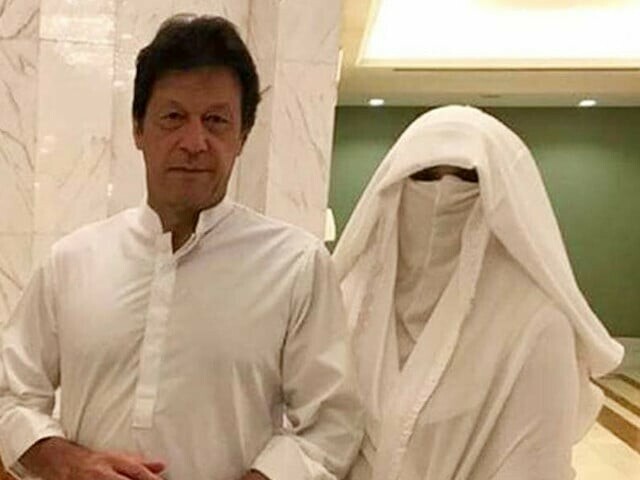
How and to what extent Bushra controls Imran Khan, undeniable revelations have come to light.
Bushra’s own hand-written diary proves that Imran Khan is in complete control of Bushra and follows his orders.
This is reflected in the words in which Bushra is making Imran Khan a political dictation and even telling what and how will the PTI’s political strategy be and who will put pressure on the judiciary, army and government?
It is giving all these orders to Imran Khan on how to put pressure on the government, establishment and judiciary and how to run whom.
In this diary, humanity is ordering that such an atmosphere should be created and so much pressure should be put so that the court could not take any negative decision.
One of the most worrying of these revelations is that what prayers to ask Allah almighty and with what words, she is also dictating by writing to Bushra Imran Khan in a diary.
The rebellious words he has cleverly used to Imran Khan in prayer to brainwash the revolution is eye-catching.
Read below what else revelations have come out in this diary:
Bushra writes in the diary that;
“If governor’s rule is imposed, preparations should be made to close the legal team and the city, that is, there should be a strike.”
“From tomorrow, there is so much pressure that the court cannot give any negative verdict, that is, there are many people.”
“Don’t make an announcement first and don’t tell the party how many days you’re coming for.”
“From morning, a public atmosphere has to be created so that the court can not take any negative decision, it is better to get statements from big lawyers, just keep a pressure.”
Some of the key questions the lawyers have to ask and Khan did not say are:
“Whatever request we go with is not heard for justice?”
“Bandial has come, Nawaz had said that now let’s see how this government will remain.”
“Khawaja (Haris) sahib should ask who were his local facilitators in Azam Swati’s case?”
“Who is trying to spoil the situation in Pakistan?”
If you believe that this is authentic information, then let us also tell you what and how Imran Khan will eat in this diary, those orders have also been issued.
As soon as you wake up in the morning, drink kahwa + honey + juice.
Eat only kebabs + meat + fish in the afternoon with vitamins
Surprisingly, milk is allowed to drink only at 12 o’clock in the night.
Therefore, after reading this article, it is found that Imran Khan’s thinking and personality is in the complete captivity of humanity and he does not call Bushra a murshid for no reason.
It is also important here that from this diary
Hasty cracks can come up later, after which matters can become more serious.
We all pray that Allah almighty will give this country leaders who are free thinking and those who raise the false slogan of true freedom should first free themselves mentally.
God forbid that people get a chance to read the pages of this diary, otherwise people will not lose faith in Pakistan’s politics forever.
The Tragedy of Karbala is not a sudden event, nor a battle for power. If you look at the background of karblah, the main reason for this is the hatred of Ali ibn Abi Talib (peace be upon him) and when Imam Al-Husayn (peace be upon him) performed hajj on the day of Ashura and addressed the army of Yazid, the army of Adah said at the same time, “O Husayn! Hatred is the hatred of your father. Each one of us has a member of our family killed by your father. We are taking revenge on them. “
The second reason for the killing of Husayn (peace and blessings of Allaah be upon him) was the construction of a lead-plated wall in front of the iron hands that were making haraam Muhammad (peace and blessings of Allaah be upon him) lawful and halal Muhammad (peace and blessings of Allaah be upon him) unlawful.
These were the so-called Muslims about whom Allah says: “Faith has not yet come down from their throats.” These were the descendants of those who pledged allegiance to the Imam (peace and blessings of Allaah be upon him) and had to emigrate.
After mu’awiya’s death, when his son Yazid (may Allah have mercy on him) took over the Annan government, he asked the governor of Medina to persuade Imam al-Husayn (a) to pledge allegiance and also said that if he refused, he should not refrain from killing at all.
Following the orders of the ruler of the time, Imam Al-Husayn (peace be upon him) was treated in the court and yazid’s message was recited.
The Imam addressed all the courtiers and said: “O unfortunate, say to your so-called ruler, ‘Had we ever pledged allegiance to those like you, Husayn ibn ‘Ali would have pledged allegiance to you.’ “
While returning, he said to musnad nasheen, “We will leave Madinah to save the holy city of Madinah. “
He travelled from Medina to Makkah on 28Th Rajab al-Marjab to perform Hajj, but yazid’s agents entered the Ka’bah in the garb of pilgrims with the intention of killing Husayn (peace be upon him).
It was only half a journey that you received the message of your brother Umm and ambassador and he handed you a letter from Mr. Muslim (peace be upon him), in which he informed you about the conspiracy of the people of Kufa and stopped you from coming to Kufa. After reading the letter, he changed his route and left for Iraq.On the 2nd of Muharram, when he reached Dasht-e-Nineveh, the commander of the army of Yazid also arrived and stopped you from moving forward. These words of yours began to awaken the conscience.
The Imam said to ‘Abbas (peace be upon him): “Irrigate the army.” He ordered the animals to be offered water and their sims to be cooled down.
After buying the land from Banu Asad, he gave them some advice and gave them this land.
You set up tents along the Euphrates. With the passage of time, the army of Sipah Yazid began to gather.
On the 7th of Muharram, Umar Sa’d (may Allah have mercy on him) asked him to uproot the tents from the Euphrates. The Yazidi army occupied the Euphrates and the army of Husayni was defeated.
On the 9th of Muharram, ‘Umar Sa’d (may Allah have mercy on him) agreed to fight, the Imam asked for a day’s respite, of course, he was waiting for a forgotten way, which was still busy with his conscience. The second reason is that the scholars say that the age of sacrifice must be at least 6 months and Ali Asghar ibn al-Husayn (peace be upon him) had to be 6 months old on the 10th of Muharram. The martyrdom document of this prince is the importance of sealing karbala, without which Karbala would have been incomplete.
The Imam divided the night of Ashura into three parts, one part for the Ansar, the other for the worship of God, and the third for the afternoon.
It was time for fajr that he asked the like-minded Mustafa Prince Ali Akbar (peace be upon him) to give the call to prayer. In the Desert of Karbala, the Adhan Ali Akbar echoed in the tents.
On the 10th of Muharram, the battle of Tabal was played, Mr. Hurr (peace be upon him) appeared in the service of his son and slave Mola, and the martyr of Karbala also became his son Ali ibn Hurr. Thus began the journey of martyrdom.It was time for Asr-e-Ashura to ask the sister for leave and came to the field of karzar, recited rajas and got herself married. After all this, Zulfiqar was neutralized and changed the map of war with a thirst.
The army of Yazid was running away like a lion.
Suddenly a voice came from the unseen.
“O self-satisfied, come back to your Lord, your Lord is pleased with you. “
On this, the Imam placed Tegh in Niyam, the scattered Sipah Yazid started to turn around.
When the poor started attacking Zahra, arrows came from somewhere, stones came from somewhere, whoever did not get anything, he would pick up hot sand and throw his body at the Imam (peace be upon him). In such a situation, he prostrated himself on the arrows and kept the promise he made to his grandfather.
Shamr Dhu al-Joshan (May Allah be pleased with him) rode on the back of the Imam in prostration and hit the Imam with a blunt dagger 13 times.
The last blow was to start, red winds started blowing, the air of Karbala echoed.
قَد قُتلَ الّحُسَینُ بِکَربَلا
قَد ذُبِحَ الّحُسَینُ بِکَربَلا
اِنّالِلّہِ وَ انّا اِلَیہِ رَاجِعون
رَضاً بِقَضَائہِ وَ تَسلِیماً لی اَ مرِہِ
It has been so many months and years that I have been thinking of writing something about Shah Hussain Lahori. I attended Shah Hussain’s court several times, but never dared to write anything about the blasphemous rind. To write on Shah Hussain, I needed faqir’s keta, jam may, darveshana roop, randana behrup, malangon ka dance, a group of mast-ul-sat mujdoobs and street corners of the city of Lahore. Shah Hussain’s vision, courage, reproachful color and soul song were needed to build my courage. I had to join the fakirs of Shah Hussain and go away from the palaces of the kings. Together with Shah Hussain, this city was to dance madly while holding jam in the gardens of the unprecedented city. On the banks of the Ravi, love prayers were to be offered in the presence of Shah Hussain. I was always waiting for all these things , but where in my destiny ? In my mind there is no thirst, no thirst, no color, no form, no song, no music, no masti, no head masti, no poverty, no dervishes, no randi, no drinking, no reproach, no dance, no dhamaal, no smoke, no hall, no kaif and sarwar, no unity, no plurality, no unity, no unity, no abundance, no unity, no unity, no compulsion, no love. There is no wasal, no wasal, no faraq, no tadap, no tarnam, no sarv le and no slogan, yet I am taking the name of Shah Hussain Lahori. That is why I dare to present my presence in the court of Faqir and Dervish Lahore. In fact, this is their inner disposal, otherwise I would not have been able to write on this rind bada nush. Let us now meet Shah Hussain Lahori and his dervishes.Every corner of The City of Lahore is a history. Dr. Tabassum Kashmeri says that it takes centuries to describe the history of Lahore. In every street corner of the city of Lahore, there is a fakir’s cata, somewhere there is a monastery, somewhere there is a pillow, somewhere there is a mekda, somewhere there is a dargah, somewhere there is a camp of randas, somewhere there is a chaubara, somewhere there is a chhaju, somewhere a bhagat has bowed his head.
Somewhere a sadhu is sitting on the tail, somewhere a fakir is singing the songs of love in his own style, somewhere there is a dervish dance, somewhere there is a festival, somewhere there is a basant bihari, somewhere there is a celebration on the banks of the Ravi, somewhere there is a song of love for the hijras of the Sufis. Somewhere in the mosques, the slogan of oneness seems to be mastana,Somewhere there is the sound of granth in gurdwaras, there is a rhythm of harmonium in the churches, somewhere the words of bhajans are being recited in temples, somewhere hearts are being mixed, somewhere there are sighs of food, somewhere there are prayers of loved ones.
There are temple bells somewhere. Somewhere there are gatherings of samaa, somewhere there is a ruckus of writers in tea houses, somewhere flowers are blooming, somewhere buds are withering, somewhere mullahs, pandits, qazis are making fatwas, somewhere poets are telling their hearts, somewhere there are colors of Holi, somewhere there is the light of Diwali, somewhere there is the festival of Baisakhi, somewhere the trees in the gardens are swinging with joy.
Somewhere there is basant, somewhere there is a dance and server gathering, somewhere there is the sound of song music, somewhere there is a pail playing.So somewhere the beat of drums is going on. Somewhere there is the smell of milking nabat, somewhere there is the smell of dervish smoke, somewhere Shah Hussain is beating drums with his fakirs. There is a crowd of dervishes around him. In the rainy city of the community of Malamatia, they are shouting slogans of jam in their hands.
Say Hussain Faqir Sain
I am not the most
Although this city is the same voice from all sides of the unprecedented.
Seven days and eight fair houses.
Lahore, a city with a rich past of culture and culture, freshness and beauty, elegance and color, history and culture, traditions and rituals, if there is one poor and blasphemous rind, it is Shah Hussain Lahori. Shah Hussain was a great son of The City of Lahore. Shah Hussain’s ancestors lived in this city for centuries. Shah Hussain was a Lahori in the perfect sense, who was the custodian of the customs of this city. The majority of the main characters present in Lahore city migrated from all over the world and reached Data Ki Nagri. It took them a lot of time to understand the specific atmosphere of the city. Shah Hussain’s case is different.Shah Hussain was born in 1538 and spent his childhood within twelve doors. His personality was a reflection of the color of the city of Lahore. His mood was vast. He was poor but the real son of this city. Shah Hussain’s father, Sheikh Usman Taksali, lived inside the gate and ran a cloth business. Shah Hussain’s grandfather Kals Rai was a Hindu and he became a Muslim during the reign of Firoz Shah Tughlaq. Shah Hussain’s family name was Dhadha Hussain. Dhadha is an offshoot of the Rajputs of Punjab. He was also called Hussain Jolaha, a resident of Taksali Darwaza, because of his father’s business.
Dada Hussain, who grew up in Tal Bagh, the neighborhood of Taksali Darwaza, was a lover of the Ravi river. Until the middle of the seventeenth century, the River Ravi flowed along the wall of the fort. Nowadays, the well-known Roshani Gate, imprisoned in Gurdwara Dera Sahib, was used for trade in those days. Ahlian Lahore used to spend his time on the banks of Ravi and nowadays Ravi is crying from Lahore, but light entertainment on its banks is still going on in some form or the other.As a child, whenever Shah Hussain stepped out of his courtyard, the merciless waves of the River Ravi greeted him. River Ravi was the real form of the city of Lahore. There were forests around it. Sadhus, fakirs, dervishes and jogis used to roam in these forests. Shah Hussain’s chest was also illuminated by the water of Ravi and this story is very interesting. As a child, Shah Hussain was sent by his father to Hafiz Abu Bakr of The Badi Mosque in Taksali Gate. At that time, mosques used to be schools. At the age of 10, Shah Hussain memorized seven paras and one day Hazrat Bahlul, a resident of Bahlol village on the banks of river Chenab, went to Lahore. He asked Hafiz Abu Bakr, “Call him who reads Shah Husayn to you.” When Shah Hussain came to Hazrat Bahlul, he asked Shah Hussain to bring water for ablution from the River Ravi.
When Shah Husayn reached the Ravi bank, hazrat Khizr (a), the ruler of the rivers, met Shah Husayn (a). Hazrat Khidr (a) said, “Son, let’s put all the water on my hand.” When Shah Husayn poured water on the hands of Hazrat Khidr (a)
So they poured the water into shah hussain’s mouth. The deeds of Hazrat Khidr (a) are also amazing, which if you look at it, he becomes a dervish and a fakir. When Shah Husayn returned, Hazrat Khidr (a) said, “Say my greetings to the elder in the mosque.” It was too late for a few drops of ravi’s water to come down the throat through Dast-e-Khidr (a) that the inner world of Shah Husayn changed.
He went to the mosque and narrated the whole story to Hazrat Bahlul, who lives on the banks of river Chenab. Bahloul asked Hafiz Abu Bakr who teaches Taraweeh in the mosque. He said, “I am the one who does this car.” Bahloul said, “Why doesn’t Shah Hussain teach Taraweeh?” and Hafiz Abu Bakr said, “He has memorized only seven paras.”
Hazrat Bahloul said that this year Shah Hussain will teach Taraweeh. When Shah Hussain started teaching Taraweeh, seven paragraphs were quickly finished. Bahloul said to Shah Hussain, “Go get water from the Ravi.” It was too late to drink the water that he recited the whole Qur’an till 27th Ramadan. God wondered how all this happened.
Bahloul took shah hussain’s arm and handed him over to Data Ali Hajveri on the banks of ravi and took the path to his homeland. Shah Hussain’s life had changed and he was engaged in mujahedeen and worship. They were bound by the outward law.
One day, he attended a lecture at the dargah of Shah Mohammad Ghaus outside Delhi Dorza. When this verse was heard, the world left everything except sports. After this, for twenty-seven years of his life, he wore a red shirt, holding a fakiri in his hand. He embraced religion and presented himself to the times for reproach. He became the pioneer of the sect of reproach which had been going on for centuries. A group of randas gathered around. In the streets of The City of Lahore, Shah Hussain, wearing a red pair, watched the spectacle. R۔ The narrator became the estate of this poor man. Playing in the streets and markets and dancing madly became his favorite pastime. Holding jam in his hands, he won the honor of being the biggest disgrace of the city of Lahore.
This color of Shah Hussain is a prominent aspect of his life.
۔ Shah Hussain used to spend the day on the banks of river Ravi with his dervishes by disrupting the worship of the pious people of the city of Lahore at night. The same narrator gave Madhav to Shah Hussain. One day, while wandering on the banks of the Ravi, the Hindu slave Looked at Madhav, and he became a house in his heart. Madhav’s heart waxed and left the house and became Shah Hussain’s. That day and this day Madhav also became an important character of the city of Lahore. I am surprised by the opinion of some intellectuals when they say that Madhavlal’s story is fabricated. They claim that Shah Hussain’s personality has been distorted by linking it to Madhav. ۔ In my view, the dedication and dedication that Madhav’s closeness had bestowed on Shah Hussain is inexhaustible. When the love of Shah Hussain grew in his pure chest, he was given the love of the fire and the love of Madhav. This love again ignited as a bonfire, which illuminated the streets of the city of Lahore. Shah Hussain gave the same kaif and masti the pirhan of Punjabi coffees. It was this love that made Shah Hussain the inventor of Punjabi coffee. What else will be left if Madhav is removed from Shah Hussain’s life? In today’s time, some friends think that Shah Hussain’s personality was adorned by Madhav. That’s not the case at all. Shah Hussain remained shah in every period. This is a Lahorei character that is unprecedented. His life reflects the atmosphere and atmosphere of the city of Lahore. Some people of this period have complained to Akbar Badshah against Shah Hussain, he drinks alcohol and dances with his malangs. When Akbar called Shah Hussain to him, he had a bottle of wine in his hand. Akbar’s followers were happy that today Shah Hussain would not be able to escape the hands of Mughal emperor Akbar. King Akbar asked Shah Hussain what was in his hand. King Akbar asked the experts to inspect this bottle and it turned out to be vinegar. On which King Akbar apologized to Shah Hussain and called his opponents very slow. Shah Hussain Lahori had given shelter to Dala Bhatti, who resisted King Akbar. Some historians have quoted that when Dala Bhatti was hanged and killed by Akbar King, his funeral was also taught by Shah Hussain Lahori.
Shah Hussain’s famous resort is located to the west of Hazrat Shah Sadruddin Huzuri Tomb and Mosque. Sadr-ud-Din Was The Caliph Of Hazrat Bahloul Daryai. Now this place is between Masjid Zakaria Khan and Masjid Moran.
Masjid Zakaria was a walking place in the west and the window was to the east of The Madhavlal Mosque. There was also Madhavlal in front of Masjid Zakaria. Hazrat Rang Bilawal Qadri had also built a mosque at this place.
Among the dervishes of Shah Hussain, the number of four was of great importance. They had four poor dervishes.Which were already famous up to four. Four of his divans were famous. Diwan Madhav, Diwan Gorakh, Devkan Bakhsh and Diwan Allah Devan. His four khaki malangs were famous, including Khaki Maula Bakhsh, khaki Shah, khaki Shah and Khaki Haider Shah. They had four Bilawals. Bilawal Shah Rang, Bilawal Buddhu, Third Bilawal Shah and fourth Bilawal Shah.
When Shah Hussain Lahori used to roam in the streets of the city of Lahore, it was the era of the Mughal emperors. Drashkoh wrote in his book Shata hayat that the Mughal princesses believed in your spiritual greatness and respected you very much. The women in the harem of Akbar King and Prince Salim were also devotees of Shah Hussain.
Whoever came to Lahore among the Mughal emperors used to visit the dargah of Shah Hussain. It is also about Nadir Shah and Ahmad Shah Abdali that when they came to Lahore, they used to attend the dargah of Shah Hussain. During the Mughal period, the governors of Lahore used to pay homage to the dargah of Shah Hussain. Nawab Zakaria Khan built a mosque at the dargah of Shah Hussain.
When The Mughal Emperor Jahangir got the news that a fakir and dervish were always in the head of Ho His heart wanted to meet Shah Hussain. He sent messages many times, but King Shah Hussain of the inner world did not consider it appropriate to go to him. One day Shah Hussain was passing in front of the royal fort to go towards the River Ravi. When the mughal emperor Shah Jahan was informed by the gatekeepers, he ordered to bring Shah Hussain inside the fort. When Shah Hussain came in front of King Jahangir, he said, “Why have I been called?” Jahangir said, “Tell me one thing, how did you find the Lord?” Shah Hussain Lahori laughed and said as if you had met me. The Lord of the universe calls to Himself whoever He wills to meet . Upon answering this, the fakir came down from the fort. Jahangir put the duty of a man to follow Shah Hussain secretly and record his movements. This man did the same and later the accounts of Shah Hussain compiled by this man were published in book form. We also have a wonderful story. We are wandering and the city of Lahore is our love.
I have the privilege of being a neighbour of Shah Hussain. Government Shalimar College Baghbanpura, Lahore is under the supervision of Shah Hussain. I keep appearing before Shah Hussain. One of Shah Hussain’s katiyas is in Shahdara.
That place is called Shah Hussain’s pillow. Takia was the meeting of Shah Hussain Faqir. Shah Hussain Lahori used to sit in this place with his malangs.
When I visited Shah Hussain’s pillow, I felt as if Madhavlal Hussain was the pioneer of pea patrols in the city of Unprecedented. I saw the place where i saw a bunch of people. Sarmast Dervish was seen dancing. The instrument of the cafe and the server was heard. Madhavlal’s song Love kept pouring juice in the ears. I could hear the voices of Shah Hussain and his poor people every hundred times.
Faqir Shah Hussain had his own style in the true color of Lahore and the love of Lahore and Punjab. The city of Lahore is famous for its fairs. Shah Hussain’s fair chiragan is very important in this regard.There were lights from Shalimar Bagh to Delhi Gate.
In Lahore, the fair welcomes The Lamp Spring. Along with this, Basant was also celebrated, which has now become a story of the past. The fountain of fair lights is no longer what it was in the last decades, but its leftover turtles still capture human beings. Shah Hussain Lahori did not care about the outward Shariah all his life. Shah Hussain continued to distribute the gifts of his inner history in the koche coach of Lahore. His religion was the love of man and he gave his own love in such a way that he was called Madhavlal Hussain. He used to sing songs of love in the streets of The City of Lahore. This student, who had left the lessons of the Madrasa of Delhi Gate, became a traveler of the inner world. She has expressed her masti through her Punjabi coffees. Shah Hussain is the forehead of Punjabi poetry. Shah Hussain’s poetry is a reflection of existential thought.
Their coffees are full of the realities of life.
What are the eyes in Mai Ni?
The state of pain Shah Hussain was a fakir. it was miserable. The city was a lover of Lahore. He stayed away from the Mughal emperors and kept his own settlement. They were painted in the color of unity of existence in such a way that every hundred began to appear. Shah Jahan was eager to meet. He brought Hasutli out of the world of reckoning and made him a traveller in the paths of knowledge. It seems to me that even today the sounds of the drums and feet of Shah Hussain and his malangs are spreading color in the streets of the city of Lahore. Shah Hussain, who loved humans, was the beloved of all. Hindus, Sikhs, Christians and Muslims all considered the festival as their own. Good luck to Shah Hussain. Salutations came to the malangs dancing at his dargah. Let the smoke of the lamps on his doorstep cover the whole region in his cloak of love and love, and let the practice of love be common. I wish man would win. May love be loved. End the business of hate. Let everyone feel refreshed by the fragrance of this earth . The fairs of The City of Lahore remained the same. May every hundred lamps of peace be lit Ranjit Singh Mela was fond of lamps. Shah Hussain’s fair was organized under his supervision. Often he used to sit in the intersection and welcome the participants of the fair. Ranjit Singh used to appear in the court of Shah Hussain. Ranjit Singh had dedicated two-two bighas of land from different areas to meet the expenses of Shah Hussain’s shrine and the annual Urs.
This festival was associated with Basant, Spring, Colors, Fragrances and Randas. This festival had nothing to do with religion because the poor are shared by all. Hindus, Sikhs and Muslims used to sing songs of love.
Sometimes I heard the sound of Lahore’s jogi in my mind. I wanted someone to call me a fakir. The sound of coffee is coming in the ears. The beat of drums is beating. Through the narrow streets, I reach Madhavlal Hussain. ۔ The breath of freshness, freshness and masti welcome me. There is a strange dedication and masti camping around his shrine. There is also good management and cleanliness in the premises of the dargah. In a certain environment and atmosphere of head masti, the pages of history revolve in front of the eyes. Shah Hussain’s character of resistance always inspires us. Shah Hussain is a symbol of resistance and a pioneer of the resistance class of Sufism.
Shah Hussain’s favorite pastime was to sit on the banks of river Ravi with his disciple Madhav. He had to come under several fatwas in order to become the leader of the blasphemous randas. The slogans of this fakir are still heard in the streets of Shahdara. In his Punjabi poems, the dance of the wings of existential thought and malangs roams in the eyes.There will be many beautiful days when farmers from all over Punjab used to come to kiss the platform of this God-fearing dervish after harvesting wheat. There was no discrimination of religion in this crowd of human beings. The culture and history of Lahore and Punjab is associated with this fakir. Love and philanthropy are the real themes of his poetry.
Malang alti palti sits next to Shah Hussain. His presence in shah hussain’s court gets a certificate of acceptance when the langar also arrives at his feet. The sadness becomes dizzy. The soul and the heart are completely humbled.
Whenever I went to meet Shah Hussain, my heart wanted me to be filled with the smoke rising from the lamps of the monastery. Keep singing Shah Hussain’s coffees together with the malangs sitting in the dargah. May the pace of life stop and keep talking about humanity, but sorrow is bad, you have to rise because of you. ۔ They enjoy the fragrance of every corner of the dargah.
A dervish and god’s love for a wandering wanderer gave him a dedication that cannot be described in words.
۔ The land of India is also so enviable that the rule of the special mistresses of God is still there. For 400 years, the true kingdom of Shah Hussain has been established.
May Allaah bless those dervishes whose shrines still shelter the oppressed people of the world.
If you call your bastard your intellect, then wise
Mir Malik Sultanan knew them by the way
You kill and you throw azrael
Say: Husayn faqir sain’s rise Lahore’s Head Mast Doresh, in whose foot is still the time of Spring. Shah Hussain died in 1599 and was buried in Shahdara on the banks of river Ravi. After some time, ravi water tried to reach the grave and he was buried in Baghbanpura. His tomb was built by Shah Delhi Moizuddin.
After his death, Madhavlal took over the management of the dargah. Due to his love for the city of Lahore, Shah Hussain is also called Faqir Lahore.
After Shah Hussain, Madhav lived for forty-eight years. Madhav was also given a place in the tomb of Shah Hussain. There are only two graves in the shrine, one is Shah Hussain and the other is Madhavlal Hussain.
Lying next to Shah Hussain, Madhav has been devoted to the pleasures of wasalyar for centuries. The inscription on his grave is very meaningful. ۔ Beloved Truth Hazrat Madhavlal Hussain.
I will seek permission from Darwish Lahore, Malang Lahore and Faqir Lahore on Shah Hussain’s coffees.
Woe to the lonely, to whom
The beautiful form was heartwarming in the eyes.
One moment Sajjan did not separate, sit inside.
Say Hussain Faqir Sain’s walk today or tomorrow
۔۔۔
One two. Three four five six seven seven of us eight
Everyone went home. you’re alone
Jeha Reja Thok Wafayu Sithi Chaddar Tan Ke Seon
Say Hussain Faqir Sain ka aaye lagi hain chhak pun
Riba from my present mahram
They’re from inside, they’re from outside, they’re from rome.
From Tana, from Bana, everything from me.
Say Hussain Faqir Naman, I am not the most
Lahore August 9,
Chief selector Inzamam-ul-Haq has announced a 17-member Pakistan cricket squad for the ACC Asia Cup and an 18-member squad for the ODI series against Afghanistan.
Saud Shakeel has been included in the 18-member squad for the series against Afghanistan, but he is not included in the 17-member squad for the Asia Cup.
The national selection committee, which includes Inzamam-ul-Haq, team director Mickey Arthur and head coach Grant Bradburn, has finalized the team after consultation with captain Babar Azam.
The 17-member Pakistan team for the Asia Cup consists of these players.
Openers. Abdullah Shafiq. Fakhrzaman. Imam-ul-Haq.
Middle order. Babar Azam (captain) Salman Ali Agha. Iftikhar Ahmed. Tayyab Tahir
Wicket-keepers. Mohammad Rizwan. Muhammad Haris.
Spinners. Shadab Khan (vice-captain) Muhammad Nawaz. Usama Mir.
Pace all-rounder. Faheem Ashraf.
Pacers. Haris Rauf. Muhammad Waseem Jr. Naseem Shah. Shaheen Afridi.
Here is the 18-member squad for the series against Afghanistan.
Openers. Abdullah Shafiq. Fakhrzaman. Imam-ul-Haq.
Middle order. Babar Azam (captain) Salman Ali Agha. Iftikhar Ahmed. Tayyab Tahir and Saud Shakeel.
Wicket-keepers. Mohammad Rizwan. Muhammad Haris.
Spinners. Shadab Khan (vice-captain) Muhammad Nawaz. Usama Mir.
Pace all-rounder. Faheem Ashraf.
Pacers. Haris Rauf. Muhammad Waseem Jr. Naseem Shah. Shaheen Afridi.
The selectors made two changes from the squad that played a five-match ODI series against New Zealand in April-May this year. Tayyab Tahir and Faheem Ashraf have been included in the team in place of Shan Masood and Ehsanullah.
Apart from them, Saud Shakeel has also been included in the squad.
Faheem Ashraf has returned to the team after two years. His presence as a fast bowling all-rounder will further balance the team. He last played in an ODI series against England in July 2021.
Tayyab Tahir has been included in the ODI squad for the second time. Earlier, he was included in the ODI series against New Zealand in January this year.
Tayyab Tahir was the highest run-scorer in the Pakistan Cup. He played a key role in the recent 128-run win over India in the ACC Emerging Cup with a century.
Saud Shakeel has represented Pakistan in five ONE-day internationals. He last played an ODI against Australia in Lahore in March 2022, in which The Pakistani team crossed the target of 348 runs and won by six wickets.
Shan Masood has not been able to retain his place due to lack of adequate performance, while Ehsanullah is busy with his elbow rehab under the supervision of the PCB’s medical panel.
The 50-over Asia Cup will begin with a match between Pakistan and Nepal in Multan on August 30. This is the first time since 2008 that Pakistan is hosting a multinational event.
Gaddafi Stadium Lahore will host Bangladesh and Afghanistan in Group B on September 3 and Sri Lanka and Afghanistan on September 5, while the Super Four match between A1 and B2 will also be played in Lahore on September 6.
Before the Asia Cup, The Pakistan cricket team will play an ODI series against Afghanistan, two matches of which will be played in Hambantota on August 22 and 24, while the third and final ODI will be held in Colombo on August 26.
The cricketers in Pakistan will leave for Sri Lanka on August 17. These cricketers will participate in a three-day camp at the National Cricket Academy Lahore from August 14 to 16. Cricketers participating in the Lanka Premier League and Hundred will directly join the team in Sri Lanka on August 18.
I have never seen such a bad situation in Pakistan in my entire life. There is disappointment everywhere. People have become mentally disturbed due to uncontrolled prices of electricity, gas and petrol, children’s education expenses, inability to run the affairs of daily life. Violence, extremism are on the rise. People’s stamina has responded. Relationships are weakening. Along with the population, the divorce rate is also increasing rapidly. Hatred reigns everywhere. No strategy to improve life is working. Our youth is frustrated with his future, he considers his future abroad more secure than Pakistan.
After all, what are the causes of these situations and their solution? Will we be able to come out of the darkness of despair and make a plan for prosperity, or will we, god forbid, reach the point where the return seems like a terrible dream? How worried and worried the scholars are about the future of Pakistan can be gauged from the conversations held in private gatherings of Happiness. Everyone asks the same question, sir, what will happen now? What could be more devastating than that? Will we be able to restore Pakistan’s dignity? There is a leader or political party who can correct the direction of the country and the nation. There seems to be a mountain of such questions, but no decision maker has a reasonable answer for how to climb the top of this mountain.
The gatherings are arranged, the debate continues. Sit-in is a matter of talk because these decisions are taken in cold drawing rooms beyond public gatherings, rallies, processions, party manifestos, and the few elites who have to make these important decisions seem to be happy and happy unaware of the economic situation of the country, even if the houses of the houses are destroyed by electricity, gas, petrol bombs. Decision-makers have nothing to do with this disaster.
Khalid Irshad Sufi Director Karwan Ilm Foundation, Shahid Nazir Chaudhry, Amjad Iqbal, Ashraf Sohail, Zabihullah Bilgan, Khalid Qureshi Director Muslim Hands and Qaiser Sharif spokesperson Jamaat-e-Islami Pakistan, Mr. Zia-ul-Haq Naqshbandi (Al-Amin Academy) were present to offer Fateha and express condolences on the death of brother-in-law. On this occasion of grief and sorrow, an informal brainstorming session of more than two hours with Mr. Mujeeb-ur-Rehman Shami on the current situation in the country gave the participants the opportunity to seek guidance on the future in the light of past and present experiences. The session started with shami sahib’s non-political talk in a program of a private TV channel recently, where he was seen appealing to the benevolent Pakistanis at home and abroad.
The Caravan Knowledge Foundation, which was founded 19 years ago by Dr Ejaz Hasan Qureshi (Urdu Digest), is now running under his patronage. The sole purpose of this caravan is to give educational scholarships to such talented students who get admission in these educational institutions but parents cannot bear the burden of expenses. Karwan Ilm Foundation has so far given scholarships worth more than Rs 23 crore to about 8700 students. Pakistanis around the world should make more financial efforts to keep this caravan running. It is also worth mentioning here that under the supervision of Pir Zia-ul-Haq Naqshbandi under the auspices of Respected Shami Sahib and Mr. Sohail Warraich, Al-Amin Academy Shadman Lahore is an institution where children and girls whose parents cannot afford hostels, food and education expenses are provided free preparation of competitive examinations (CSS, PCS) and the above facilities. Hundreds of educated youth of this institution appear in competitive examinations By achieving significant achievements, they are fulfilling their responsibilities in high government positions.
“We have not learnt any lessons from the past. Ayub Khan convinced Pakistani businessmen, industrialists, investors all over the world that Pakistan has to be made a strong power in the world industrially. On the persuasion of Ayub Khan, all these people came together to give industrial development to Pakistan, invested in Pakistan, laid a network of industries, it was expected that Pakistan would quickly prove its iron on the industrial horizon of the world. We will even be able to fully manufacture and export world-class cars instead of assembling them. (Continued)
A new issue has been raised, which was earlier used by the people of a particular sect from us ahl-e-Shi’a (a).
That’s the question..
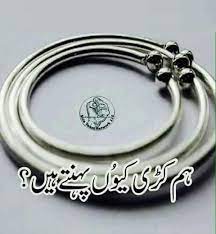
Why do you wear a chain in your hands or feet, in a tradition, it is proved by an innocent that they wore it.
If you say that this is the Sunnah of Imam Al-Sajjad (a.s.), then he was forced to wear it, then this army is the Sunnah of Yazid.
While Sikhs and Hindus also wear it, then what is this Hindu ritual, what does it have to do with Islam?
Guess it..
Surely this question must have been asked to most of my readers.
And the answer is two.
1 – A vow
2 – Sunnah belongs to Imam al-Sajjad (a.s.)
Today, let’s know, “Why do we shias wear a pair of clothes?”
What was the identity of the slave in Arabia?
Was it made on his forehead that he was a slave?
Or was there any other specific dress worn?
They will tell you that
The custom in Arabia was that when someone had to be enslaved, a “link” was put in his hands, feet or neck, which knew that he was not free, he was a slave.
So we who wear this pair.
It’s actually slavery.
It makes us feel that we are slaves of our master.
That’s why we didn’t accept slavery like you did.
because
The difference between slave and servant is that
A servant can leave his job whenever he wants.
But unless the master frees the slave, he cannot go into the slavery of anyone else.
That’s what the Sikhs are talking about
So ask a Sikh scholar.
Why do you wear this dress?
He will tell
“Baba Guru Nanak used to wear it”
Then ask, why did they wear it?
Then he’ll tell you that…
All the children born to his parents before Baba Guru Nanak died.
A dervish said to them, “The child who is born now
Making imam al-Hussain (a) a slave for 5 years.
His parents wore the name of Maula Hussain (a.s.) to Guru Nanak.
He survived and when he grew up, he wondered who Hussain (peace be upon him) was, whose bondage saved him from death?
Guru nanak was taken to Makkah, Madinah and Karbala.
That’s why Goronak said:
Jagat Guru Hussain Dooja Na Hoor Ko
Aisi Marni Died, Name Liu Jagro
Do you understand now?
This link is not the tradition of the Sikhs, but actually the slavery of Husayn (peace be upon him).
And remember, friends.
If you are wearing this pair with any other intention, take it off and then wear it again with the intention that.
From today I am a slave of Husayn (peace be upon him).
and
All the readers of the Qur’an know that there will be gold bracelets in the hands of the Jannatis?
Then now
Be proud of this link because.
In your hands or feet is the link of Ghulam-e-Husayn (peace be upon him).
Who knew that a child born in Samanabad will become a role model in social services, the child who himself has studied with zakat funds will achieve success and take the lead of a bright future for helpless low-resource children. State-of-the-art projects for those who have the pain of human well-being have set up on the ground and made a lab for the journey of change through them. Anyone whose heart wants to visit the Noor Project by going to EME Society Canal Road will understand that if someone decides that he has to do some work, then how it is implemented, this story is of a successful young man Amjad Wattoo who opened his eyes in Samanabad Lahore, his father had a general store, he belonged to a middle class family. All things were going on as usual that his brother, who was Hafiz Quran, suddenly disappeared, in search of which his father gave all his resources, after a year and a half, his brother was found but his house had changed from middle class to poor class.
Amjad Wattoo was an intelligent student, he studied in a great institution like Government College with Zakat Fund and along with education, he also helped his family by doing small things at night. He changed himself by reading and writing and then dedicated his life to welfare work to change the lives of thousands of people like him, he also worked abroad, now he is also doing business with brothers and the interesting fact is that the business of all the brothers is together and the coincidence is such that the enviable and ideal Amjad Wattoo got together with his friends. Founded the Karnoor Project.Our friend Sabir Bukhari, who is a very dynamic personality, invited us to visit the Noor Project and said that you will be spiritually happy to see this project. Due to whose leadership skills, the officers of the provincial service were able to get their rights after 75 years, they are also book, when we reached the Noor Project, two things impressed me a lot.
We have seen this quality of cleanliness only in the West, this school is visible, where the children of destitute low-resource families are given quality education like the most expensive schools in Pakistan, many of the teachers are foreign qualified, children’s books, uniforms are the responsibility of the sub-institution, but also transport to bring children. Look at the quality of cleanliness of Noor Project, if they can also maintain its fifty percent cleanliness standard in their institutions, then the fate of Pakistan will change because clean environment increases the efficiency of work. The credit for this goes to the management of noor project.
Dozens of projects are working under the auspices of Noor Project, in which vocational training institute is very important because there are teaching such skills to the youth which are needed in the market and this skill gets immediate employment after cooking. It is said that if one percent of the country’s population is skilled and they are taught English or Arabic, then they can bring revolution. A 70-bed hospital under the aegis of Noor Project is in the final stages of construction where the beneficiaries will get quality facility of free treatment because the performance of a dispensary and dental unit that is currently working is excellent. Noor Project is preparing food for 2,000 people every day, which is fed with arrangement, Noor Project people have announced that those who want to commit suicide due to poverty, unemployment or any reason should contact us only once. has kept
Noor Project is also working on a project of free legal aid, peace and professional services for solving problems, which will be launched soon, where there is a cry of problems all the time in Pakistan, while the personalities and institutions who have the pain of humanity in the society are playing their role for the betterment. Instead of removing insects, I should also appreciate the good works, there is no shortage of those who have pain and work in Pakistan, they should be encouraged so that the people of Pakistan come forward to follow them.
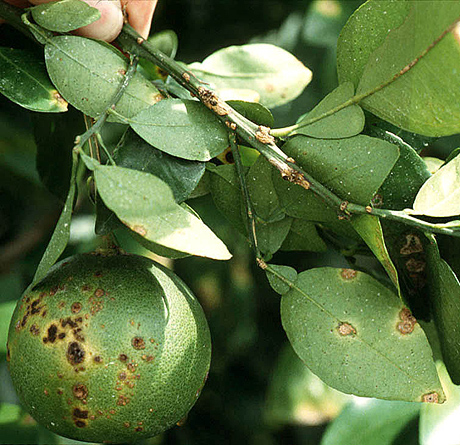
The disease of citrus canker is spread by a particular bacteria and wherever this disease attacked in the world, this disease rapidly engulfed the gardens and in many countries of the world, thousands of acres of orchards had to be destroyed due to citrus canker disease. Lemon, grapefruit and sweeteners are highly attacked in citrus fruits, but in other countries, mixed varieties of oranges and some citrus fruits are also reported to be affected by it. In Punjab Province. The area under cultivation of citrus fruits is about 450,000 acres and out of the total orchards, there are only well gardens on 335,000 acres. Kannu, which is exported to other countries, it is very important to protect the fruit of the well from the disease of Coasters Canker, so gardeners should follow the instructions of the Agricultural Scientists of the Citrus Research Institute on an emergency basis to prevent the disease of Citrus Canker so that gardeners at home and abroad can get the right price for their fruit. Citrus canker disease is caused by bacteria, which affects leaves, branches, fruits and other parts of the plant. In the event of a severe attack of the disease, the health and productivity of the plant is affected. Which drastically reduces the delivery and price of the affected fruit. The disease was reported in the subcontinent in 1942 and is now found in all the fruit-producing countries of the world. Citrus Canker’s disease is of economic importance. This disease of orchards is increasing day by day in the world. Symptoms of citrus canker disease include small circle-shaped brown spots on leaves, leaves, branches, twigs, thorns, fruit stalks and fruit skin. The severe attack of the disease occurs on new leaf branches and fruit. On the leaves, this disease appears in the form of small bulges. These bulges are first dark green in color, which later turn dark brown and hard, and their hardness is clearly felt by touching them.
These marks start from the point of a needle and grow up to 10 mm and the role of the host plant, favorable weather conditions and the age of the plant is important in the growth of these marks. Many of the markings together form a large field that, first white or gray, and eventually cracks from the middle after being rough and hard, and millions of spores emerge from it and spread. Due to the attack of disease on the leaves of the flowers and the middle branch of the leaf, the worm and leaves of immature fruit fall, which makes the plant look ugly. The plant dies due to the increase of disease on the shoots and branches. The signs of disease on large branches are irregular, rough and very clear. The inner pulp of the fruit is safe. Affected fruits have no value in the market In case of a severe attack of the disease, the fruit worm can be And in addition to reducing the productivity of the plant, the plant can dry up and die. Germs live in winter in infected plants, leaves and shoots, disease germs are found in infected leaves for one year. In branches and skin, these bacteria are able to cause disease for 3 to 6 years. This bacterium can live for 52 days in disease-free soil and 7 to 9 days in diseased soil. Disease spreads through natural leaf pores or wounds. For the disease to spread, the temperature is 20 to 35 degrees Celsius, while the abundance of rain and the presence of moisture on the outer surface of the host plant for about 20 minutes is necessary. The germ first affects the outer surface of the plant. These microbes are unicellular and rod-shaped and can also live in the roots of some grasses. Strong winds, insects and humans play an important role in spreading the disease.
If the wind speed is 18 kilometers per hour, then the germs of this disease can quickly engulf the gardens for miles. In addition, citrus leaf miner, especially the deep vines that attack the new sprout, forms deep heads on the leaves, in which the bacteria of citrus canker accumulate and it spreads a lot as soon as the horizon conditions are found, later the disease spreads by falling on the diseased water leaves, branches and fruit. From one place to another, the disease spreads through infected plants, infected patchy branches, nursery stock, nursery workers, tools and equipment used in gardens. In addition, dumping infected waste from citrus factories near gardens also increases the chances of spreading the disease. When the leaves, stems and fruits mature, they have strong resistance to the disease. Disease attack occurs within seven days of a new outbreaking the first three months of flowering, the fruit is more affected by the disease. Infections after three months cause small and incomplete signs of disease. In different varieties of orchards, leprosy of citrus fruits is more severely attacked on grab fruit and paper lime. However, his attack on the new gardens of Kanoo has also come under attack. Younger plants are more susceptible to the disease than older plants. Cultivate resistant varieties to prevent citrus canker. Cut off and burn disease-affected parts of disease-infected plants. Collect the leaves of the disease-affected plant and burn it. Plant new plants again after at least two years in a place from where the disease-infected plants have been removed. All other host plants in the nursery should be destroyed. Nursery and garden-related tools should be washed with a disease-free solution. When plants are wet or moist, farming should be avoided in them. Treat leaf miner with a spray. Safety measures should be strictly followed at the time of leaf and branching of the disease-affected plant. In the gardens, first eliminate the leaves, branches and fruit affected by citrus canker, and if the severity of the disease is seen in any place, then prune the plants and burn the branches while going towards the attack of low-intensity disease. Do not use scissors or saws used during branching of disease-infected plants for any healthy plant. Proper farming issues and spray help in the prevention of disease. Branching of parts of disease-infected plants weakens the effect of germs. Be sure to consult the local staff of the Agriculture Department before using any kind of poison.
Is it permissible to eat vinci fish??
💓 Which food is abominable or forbidden?
♦Look at …
🌙 In the light of authentic hadiths and famous fatwas, a great scholarly and research post,
🌒 Text of Hadith:
عِدَّةٌ مِنْ أَصْحَابِنَا عَنْ سَهْلِ بْنِ زِيَادٍ وَ مُحَمَّدُ بْنُ يَحْيَى عَنْ أَحْمَدَ بْنِ مُحَمَّدٍ جَمِيعاً عَنِ ابْنِ مَحْبُوبٍ وَ أَحْمَدَ بْنِ مُحَمَّدِ بْنِ أَبِي نَصْرٍ جَمِيعاً عَنِ الْعَلَاءِ عَنْ مُحَمَّدِ بْنِ مُسْلِمٍ قَالَ : أَقْرَأَنِي أَبُو جَعْفَرٍ ع شَيْئاً مِنْ كِتَابِ عَلِيٍّ ع فَإِذَا فِيهِ أَنْهَاكُمْ عَنِ الْجِرِّيِّ وَ الزِّمِّيرِ وَ الْمَارْمَاهِي وَ الطَّافِي وَ الطِّحَالِ قَالَ قُلْتُ يَا ابْنَ رَسُولِ اللَّهِ يَرْحَمُكَ اللَّهُ إِنَّا نُؤْتَى بِالسَّمَكِ لَيْسَ لَهُ قِشْرٌ فَقَالَ كُلْ مَا لَهُ قِشْرٌ مِنَ السَّمَكِ وَ مَا لَيْسَ لَهُ قِشْرٌ فَلَا تَأْكُلْه –
Reference:
Coffee: Vol. 6, p. 219.
🌒 Clearly in this hadith:
💓 From the book of Imam Al-Baqir (a) and Imam ‘Ali (a), some sea creatures are forbidden. Including balm fish (maar mahi) and then he says. Every fish that has peels on its body. They are lawful. And who has no skins . They are forbidden to eat.
💓 This hadeeth has been narrated by Shaykh Al-Kalini in Kafi with two proofs. In one, there is a lot of ease. Which has been explained by some scholars of Rijal, while the second certificate contains all the taqat. So this tradition is correct. Al-Shaykh al-Tusi narrated the same narration with this certificate.
رَوَى الْحُسَيْنُ بْنُ سَعِيدٍ عَنْ فَضَالَةَ بْنِ أَيُّوبَ عَنِ الْعَلَاءِ عَنْ مُحَمَّدِ بْنِ مُسْلِم ۔
Reference:
Tahzeeb al-Ahkam, Vol. 9, p. 2.
🌒 There are all the truths in this certificate, so this certificate is also correct. Therefore, with these words, this tradition has come to us from three certificates, two of which are correct. Al-Shaykh al-Saduq narrated in Min la Yahadrah al-Faqih:
وَ قَالَ الصَّادِقُ ع كُلْ مِنَ السَّمَكِ مَا كَانَ لَهُ فُلُوسٌ وَ لَا تَأْكُلْ مِنْهُ مَا لَيْسَ لَهُ فَلْس ۔
Reference:
Min la Yahadrah al-Faqih, Vol. 3, p. 323.
🌒 Shaykh Al-Saduq narrated a hadith from Imam al-Sadiq (a) that a fish that does not have peels on its body. Their food is forbidden. According to a group of scholars, those traditions of Min la Yahadrah al-Faqih are reliable. In which a hadith should be narrated from Baljam Masoom.
💓 Apart from this, there are many hadiths. But we have chosen a few reliable traditions. These hadiths were so popular among our scholars. That the scholars also gave fatwas on it.
🌒 Al-Shaykh al-Mufid says in his famous book al-Maqna’ah: “Wa’l-min sa’id al-bahr al-ma’qaan la floss min al-samook wa la yukal minh ma la fals la wa ya’tajnab al-jari wa al-zamar wa al-marma’i min jumla al-samook wa l’yukal altafi min wa hu’l-mu’mat fi’l-ma’a’afitwa’ah.”
💓 Every fish is permissible in sea hunting. on which i have peels. And those fish are not permissible . on which there are no peels.
Reference:
Al-Maqnah, p. 576.
🌒 The famous faqih Ibn Idris Al-Hilli said:
💓 Wa ama haywan al-bahr, fala yastabah akal shi’a minh al-samak khasa, wa al-samak yukal minh ma qan la fils, wa hu al-qasr, faama ma’lam yaqin la qashar, and an-antalaq asm al-masq fala yahl akal akal.
💓 It is not permissible to eat anything in marine creatures. Except for special fish, and fish that can be eaten. They have skins on their bodies, and they have no skins. So even if the name fish is applied to them, their food is not lawful.
💓 Reference:
Al-Sarair al-Haawi l-Tahrir al-Fataawa, Vol. 3, p. 98.
🌒 Therefore, in the light of the famous fatwas of the Qur’an, Sunnah and scholars, these fish are halal. Whose skin is peeled. If for some reason the peels have come out of their body. Or the peels are too small to be known. So there is nothing wrong, the title of being peeled is enough.
The disbelievers of Wilayat ‘Ali (a.s.) are distorted creatures; let us give you a summary of another tradition. Look at it. Why is fish with peels halal? And why are the rest forbidden? The rest are haraam for this reason. That they are distorted nations:
💓 One day, Maula Ali (a.s.) was giving a sermon. He said while giving the sermon. that I am him. Whose wilayat was denied by thousands of ummahs. So Allah has destroyed them.
💓 Reference:
Nahj al-Israr, p. 127.
🌒 After the sermon, some people came to Maula Ali (a) and said: People are selling jari fish in Maula Bazaar. Mulla smiled and ordered. Let me show you something even more strange . You took them all to the shore of the Euphrates. Put your saliva in the Euphrates River and say a few words. Immediately a fish pulled its mouth out of the water. So the maula said to him. Woe to you and to your people. Tell them who you are?
The fish said.
💓 We were from a village on the banks of the river. When Allaah presented to us his will. So we refused, so Allah has distorted us. Some of us are on the ground. And some in the river. who are inside the river. We are the fish and those who are on the land. They’re lizards.
💓 Reference:
Miracles of Imam ‘Ali p. 73.
🌒 The Prophet (s) said:
💓 Allaah has distorted seven hundred such ummahs. Those who disobeyed the Awsiyas after the Prophets (a) mutilated four hundred of them in the form of land animals. And he mutilated three hundred nations in the form of sea animals .
💓 Reference:
Tafseer Noor al-Thaqaleen, Vol. 7, p. 89.
🌒 I’d like to say one thing here. That’s if we all want it. That in the times to come, in the times to come, the coming generations, the nations to come, do not think of us as distorted. So we have to accept Wilayat ‘Ali (a.s.).
Otherwise…
💓 Your stories will not even be in the stories.
❤️ Note:
💓 Consider also the word fish:
💓 How wisely the lexicographers who compose the words of the languages have also used in selecting this word. And how the meaning has been made clear.
💓 Fish is actually a combination of two words.
🌙 1- Mah
🌙 2 peels
🌙 Mah is called the moon.
🌙 And on the skin of the fish’s body, you made the skin of the moon-shaped peels, which are today called “chana”. They are prepared by peeling. That is , mah and bark : that is , the fish of the tea , from which the chana is peeled off . It’s called fish. It’s not without tea… !!
Here are the zodiac signs along with their corresponding date ranges:
Aries (March 21 – April 19)
Taurus (April 20 – May 20)
Gemini (May 21 – June 20)
Cancer (June 21 – July 22)
Leo (July 23 – August 22)
Virgo (August 23 – September 22)
Libra (September 23 – October 22)
Scorpio (October 23 – November 21)
Sagittarius (November 22 – December 21)
Capricorn (December 22 – January 19)
Aquarius (January 20 – February 18)
Pisces (February 19 – March 20)
Each zodiac sign is associated with certain personality traits and characteristics, according to astrological beliefs. Keep in mind that astrology is a subjective practice, and not everyone subscribes to its interpretations.