In our country, children grow up listening to the stories of Alf Lila, Amr Ayar and Tarzan, boys spend reading the stories of Imran series and Mount Qaf, youth passes through the sheets of historical novels in which there is nothing but exaggerations and delusions. In this way, concepts like magic wand, lamp of religion and flying carpet are absorbed in the religion and the whole life is spent waiting for miracles. The kingly man thinks that one day suddenly there will be a bag full of notes, a prize bond will come out or if there is a lottery, then life will change. It is thought that if a jinn would appear by rubbing a lamp and bow down and say, “What order, my lord! Some people even think that on this occasion, the first wish I will express is that my 100 wishes should be fulfilled. In this way, every moment new story is heard, new dreams are made, the story of life is completed by deceiving step by step. That is why we do not have stories, storytellers, storytellers and storytellers starving.Probably in December 1976, when Zulfikar Ali Bhutto came to the National Assembly, he had a vial in his hand. He opened the lid of this bottle and told the Leader of the Opposition Maulana Mufti Mahmood that oil has come out from Dhodak area of Dera Ghazi Khan. But when Zia-ul-Haq came, he said, democracy has gone to take oil, now the back of the majority will be publicly whipped. When the Sandak project was started in Chaghi district of Balochistan during benazir’s tenure, it was told that gold and copper coming out of here would usher in a new era of prosperity. Mining is still going on, but if I borrow the poems of Habib Jalib;
The same is the situation of the poor.
Days have passed only for ministers.
Every Bilawal is indebted to the country.
Benazir’s feet are bare
When 6 billion tons of raw copper and 600,000 tons of raw gold deposits were discovered in the Rekodik area of Chaghi, the good news was once again given that this project would prove to be a game changer. It was reported that there is the fifth-largest global reserve of gold. This mineral deposit could not be extracted, but it had to be taken and the International Court of Justice fined $ 6 billion for violating the agreement. When Nawaz Sharif became prime minister for the second time, a new jackpot was found on February 12, 2015. The Chief Minister and the Prime Minister reached Chiniot and revealed during the public meeting that such a huge deposit of gold, copper, and iron has been discovered in your area Of Refah Sadat that all the difficulties will be highlighted on the kefir and blind path. But this period of good fortune ended before it started. One can tell where this Chinioti treasury went and why Shahbaz Sharif did not try to extract this gold from Chiniot instead of rubbing his heels at the IMF’s doorstep after becoming a prime minister?
By telling these stories, the path of a new Pakistan was paved and Imran Khan came as a saviour. In January 2019, a consortium of foreign companies started burmakari under the “Crab One” project. The excavation in the Indus basin of the Arabian Sea was being carried out to detect expected gas reserves. There is a 15 to 20 percent chance of success in such projects worldwide, but the captain was confident that the ‘gas’ would come out from here. Therefore, during a meeting with journalists on March 21, he gave the good news that the situation in the country is going to change. On March 25, Federal Minister for Petroleum Ghulam Sarwar confirmed this and said that good news will be heard next month. On April 8, in a capital talk, Federal Minister Faisal Vawda announced with full confidence that jobs are going to rain. Within a week, ten days, two weeks, or at most a month, so many jobs will come that the servants will fall short. There will be such a situation that even the paanwala, the cart wala, will say, take tax from me. He said, “If this claim is not proved to be true, then they should be destroyed.”On May 18, Imran Khan went to lay the foundation stone of Shaukat Khanum Hospital Peshawar and collect funds, while addressing the ceremony, he appealed to the participants that today you must read two naafils because a gas well is being dug in the sea near Karachi. We will know in a week that there may be such a large stock that there will be no need to import gas from outside for the next 50 years. When the Prime Minister was showing false dreams of development and prosperity to the people of Peshawar, his Special Assistant on Petroleum Nadeem Babar in Islamabad was telling that the excavation that was taking place in the bottom of the sea, 280 kilometers from Karachi, has been stopped after drilling 5,500 meters because there is no possibility of getting oil or gas from there.
These stories of the past are remembered because nowadays a new story is being told that copper deposits worth $ 6 trillion have been discovered in Mohammad Khel area of North Waziristan. I am not denying this news, just saying that the value of lithium reserves in Afghanistan is estimated to be $ 3 trillion. South Africa has the largest gold reserves and diamond mines in the world. There is no need to go too far. Balochistan is rich in minerals. Uranium is produced from Dera Ghazi Khan and Rajanpur. If despite this, the people of Afghanistan, Africa, Balochistan and South Punjab are backward, then there is no need to be deceived by a new story.
As this is the 21st century, it contains dilemmas, theories, and conflicts. Before I pen down my thoughts on this paper, I want to clarify that the things I’m going to state here are merely my scattered and unstructured thoughts. So, with this disclaimer, let’s dive into the world of my gray thinking.
There are some new and famous terms I got to know about, like patriarchal, feminists, gender strain or role stress, masculinity, etc. These words are quite famous nowadays. On one side, feminists are screaming, fighting, and launching movements like ME TOO, trying to safeguard their rights and break the odds and norms that have led society over the decades. On the contrary, men are trying to secure their position in society. Where some are in favor of feminism and these kinds of movements, whereas some are referring to this as a “Blazing Fire” and “an attempt to lessen the influence and role of men in society”… I don’t know on either side you support, but here is my verdict on this baffling situation. If I talk religiously, then there is a crucial need to get our facts right. By this, I mean that we should know what roles are prescribed to us by Allah SWT and what kind of things we should do and support. This situation would be untangled and become more clear if we read the Quran and Hadith of Hazrat Muhammad SAWW.
Chapter 4, in verse 34, of the Qur’an, states that “men are the maintainers of women,”
and
(Surah Al-Shura (42), ayah 49). The Prophet (SAAS) says: ‘Women are the (equal) sisters of men’. Women make up half of society, and they are responsible for the nurturing, guidance, and reformation of the subsequent generations of men and women.
I’m never able to understand the conflict regarding gender roles and gender rights. There are some cases where women are struggling to get even their basic rights, and there are some cases where men are facing abuse and violence from their females. But what exactly are the core factors behind these dilemmas? In my opinion, I guess we are focusing more on what other genders have and care more about their rights and want the same for their gender, which is quite difficult. Wondering why? Keep reading, then.
This rivalry is creating more hate and differences and making the opposite gender more insecure despite fulfilling their desired demands. So what are the demands of women and the same for men? Where some women want equality in every aspect of life, whether it is professional life or at home. They want to break the stereotypes, whereas these demands are making the men insecure, and some are even angry and make aggressive comments like “these feminists are given thousands of dollars to run these organizations and to lead down the male dominant society.”
After thinking about all the above-stated things, there is an ocean of questions that hit my mind. These are the claims of both parties, but why are both genders making these claims? Are they true, or are they making these scenarios? Can we reach a win-win situation? What will be the consequences of this conflict? Will this hate and resentment lead to World War 3? Why are we not happy with our gender roles and responsibility? Why is gender role strain so often used in feminist speeches? Do they want something good, or are they misusing their power and influence? Do they want to play with the young girl’s mind? Are these movements and organizations funded by the West, or is there a real need for girls to fight and protect their rights? Has anything been done yet for the betterment of women or women’s empowerment? So many questions targeting feminism, right? To escape any biases or criticism, let’s address the questions and concerns regarding masculinity, toxic masculinity, and feminists’ favorite word, patriarchal society. Why are men not seen most often in these movements? Do they think this is the only way to lead down the men? Do men misuse their dominant and strong influence and position in society? Do they deliberately and unjustly snatch the rights of women, especially in professional and formal jobs and places? Is there gender role strain? Is there a certain standard for both genders to behave and cause gender roles, e.g., we thought that men don’t cry? They have to hide their emotions because they can not be as sensitive as women. Also, they cannot be so bold about their insecurities and cannot do catharsis as women do. Is this the reason men face mental stress and depression? Are these insecurities pushing both genders to fight or attracting the other gender to have the same equality as them? Is there any possibility of creating equality between the two genders? Will the government play its part in dissolving this rivalry? Or do we have to make ways for ourselves to reach a stable and permanent decision? Is there any common ground between these two to resolve these conflicts?? Ah, a lot of questions, assumptions, theories, myths, norms, conflicts, and consequences, and yet no one has a clear solution to solve this matter. There is one ayat in the Quran that makes things clear for me. The Quran (49:13) does not make any distinction based on sex and believes in human equality: O Mankind! We created you from a single (pair) of a male and a female and made you into nations and tribes, that ye may know each other (not that ye may despise each other).
To Conclude, I just want the next generation would not to be able to see this cold war between the two genders, but this seems quite impossible, and maybe in the future, there will be 3, 4, or even 5 gender conflicts as LGBTQ will be a new twist in this baffling situation.
Let’s hope for the best.
Prophet PBUH said about his grandson “Undoubtedly Hussain is the beacon of guidance and the ark of salvation” Here it is not just emphasizing the relation of Hussain with Holy Prophet PBUH but the determined and great traits of character of Hussain and his devotion towards religion Islam and universal truth are being reported by Holy Prophet.
Every year the month of Moharram reminds us of the great sacrifice rendered by Hussain and his family in the ” desert of Nainwa” (a barren land in Iraq) from leaving Madina lonely to the eve 10th Moharram when he was killed brutally in front of his sisters and daughters.
He accepted martyrdom but didn’t accept the unjust rule of yazid (the illegal ruler and proponent of this plan) and favoured the truth completely.
This tragic story of Islam covers each and every perspective of ethics and morally righteousness it starts from renouncing of unjust kingship and then a great commitment to a difficult but valid cause, as time goes on , it demonstrates courage, patience and devotion toward divine’s parameters
An unpleasant night of 28th of Rajab he had to leave Madina with his family as first threat of not accepting authority of yazid.
His Hajj was converted to Umrah and he left Haram to protect It’s Holiness.
His messanger was killed along with two children in kufa and it was clearly a violation of ” Diplomatic Ethics”
At the end he reached at Karbala in 61 AH, 2 Moharram and brutally killed along with 6 months old son ,13 years old nephew, 18 years old son and 31 years old Brother and seventy two true companions.
The message that Karbala proposes is the courage and thanking the God even through thick and thin.
Thank the God even the darkest time ,He will never let you alone.
Hussain is the metaphor of “Sabr and Shukr”, courage, devotion, commitment and patience. He preferred death over following the unjust and cruel rule. He raised voice against the illegal premises. He is victorious of that war and he made yazid loser with his silence and patience. Now everywhere we can hear the only slogan that is being voiced ” Hussain Zinda baad” Yazid Murda Baad ” so this is a clear and great message to cruel, Atrocious and power mongers that nature never forgive you on your misdeeds and manipulation of rules.
Hussain Zinda baad
Introduction to Naegleria fowleri
The “brain-eating amoeba” or Naegleria fowleri is a species of the genus Naegleria. It is not a real amoeba, but rather a shape-shifting amoebo flagellate excavate.it is a member of the phylum Percolozoa. The major food source of this free-living creature brain-eating Amoeba is bacteria, but it has the potential to turn pathogenic and cause naegleriasis, also known as primary amoebic meningoencephalitis (PAM). It is a very uncommon, severe, and typically fatal brain illness.
This brain-eating Amoeba is Typically present in warm freshwater bodies of water, including ponds, lakes, rivers, hot springs. And also in industrial or power plant warm water discharge, geothermal well water, swimming pools with low levels of chlorine (less than 0.5 mg/m3), water heaters, soil, and pipes carrying tap water. Either an amoeboid stage or a transient flagellate stage is possible.
The pathogen was given the name Malcolm Fowler after the first person to publish the PAM case reports. An Australian pathologist at Adelaide Children’s Hospital. The first person to write the initial series of case reports for PAM was an Australian pathologist at Adelaide Children’s Hospital named Malcolm Fowler, after whom the organism was named.
The thermophilic, free-living brain-eating amoeba Naegleria fowleri is typically present in warm, hot freshwater areas like ponds, lakes.. Its population tends to grow as temperatures rise. The amoeba is thought to have developed in the United States. Even though it was first discovered in Australia in the 1960s. There are three different types of N. fowleri: cyst, trophozoite (ameboid), and biflagellate. The flagellate form has been present in cerebral fluid. However it does not produce cysts in solid human tissue, which only possesses the amoeboid trophozoite stage.
Life Cycle and Habitat
Trophozoites change into microbial cysts in order to withstand extreme environmental conditions. The cyst is a single-layered, spherical structure with a diameter of 7 to 15 m that surrounds the nucleus of a single cell. The cyst serves as a tough casing that enables the amoeba to tolerate challenging conditions. Lack of food, crowding, desiccation, waste buildup, and freezing temperatures are factors that cause cyst formation. When the situation gets better, the amoeba can come out of the cyst’s central pore or ostiole. It is note that N. fowleri encysts at temperatures lower than 10 °C (50 °F).
For humans, the infectious stage is the trophozoite stage, during which the organism can actively feed and proliferate. The trophozoite adheres to the olfactory epithelium before travelling through the cribriform plate in the nasal cavity and into the brain along the axons of olfactory receptor neurons. The protozoan organism’s reproductive stage transforms at around 25 °C (77 °F). And thrives best at about 42 °C (108 °F), where it multiplies via binary fission.
Trophozoite Characteristics and Behavior
Trophozoites identify by the flexible membrane that surrounds their nucleus. They stretch and fill pseudopodia, or extensions of their cell membrane, with protoplasm to move. Pseudopods grow in the direction of the motion. When trophozoites are free-living, they consume bacteria. They appear to phagocytize (enclose and digest) red blood cells in tissues and cause tissue damage either by releasing cytolytic chemicals or by coming into direct contact with neighbouring cells while using cytolytic membrane proteins.
On their membrane, Naegleria fowleri trophozoites form one to twelve amoebastomes (amorphous cytostomes), which are frequently referre to as “suckers” or “food cups,” and which they use for feeding in a way analogous to trogocytosis.
Naegleria fowleri is biflagellate, or having two flagella, and has a pear-shaped flagellate stage. When diving or swimming, for instance, this stage might be inhale into the nasal cavity. When trophozoites are place in distilled water, for example, they are subject to a change in the ionic strength of the fluid. They are in, which results in the flagellate form. Although the flagellate form is absent from human tissue, it is found in cerebrospinal fluid. A trophozoite emerges from the flagellated form once it has entered the nasal cavity. Within a few hours, this transition takes place.
Environmental Factors
Excavata Naegleria fowleri lives in water and soil. It cannot thrive in seawater since it is sensitive to acidic and drying environments. Since the amoeba flourishes at somewhat high temperatures, summertime is when infections are most likely to occur. As a facultative thermophile, N. fowleri may thrive at temperatures as high as 46 °C (115 °F). Amoebae can live in warm freshwater when there is a sufficient supply of bacteria for food. Artificial bodies of water, altered natural ecosystems, and sites with soil, unchlorinated water, or unfiltered water are among the places where numerous amoebic infections have happened.
It seems that N. fowleri thrives when there is unrest. According to the “flagellate-empty” hypothesis, the reason Naegleria thrives when thermosensitive protozoal fauna doesn’t is because there is less competition. In other words, N. fowleri flourishes in the absence of other predators who would otherwise deplete its food supply. According to this theory, human interferences such thermal pollution lead to an increase in N. fowleri population by driving out rivals for scarce resources. Amoeboflagellates can disperse more easily in areas devoid of rival species thanks to their motile flagellate stage.
Naegleriasis, commonly known as primary amoebic meningoencephalitis (PAM), amoebic encephalitis/meningitis, or simply Naegleria infection. It is a typically fatal infection of the brain that N. fowleri may cause. Although there have been incidences in cooler climates like Minnesota, US. Infections often happen after swimming in freshwater in a warm environment. In rare instances, nasal or sinus irrigation with contaminated water in a nasal irrigation tool like a neti pot has resulted in illness.
Normally, N. fowleri feeds on bacteria, but when it infects humans, the trophozoites eat astrocytes and neurons. Since Naegleria and Acanthamoeba contain a structural homolog of animal CHRM1. It has been hypothesis that the neurotransmitter acetylcholine may operate as a stimulus that causes N. fowleri to traverse the cribriform plate.
Symptoms, Diagnosis, and Treatment of Naegleriasis
After nasal exposure to N. fowleri flagellates, symptoms take one to nine days (on average five) to manifest. Headache, fever, nausea, vomiting, loss of appetite, changed mental status, coma, drooping eyelid, blurry vision, and taste loss are symptoms that may appear. Later symptoms could include hallucinations, convulsions, confusion, lack of focus, stiff neck, and difficulty of balance.
Animals can be infected with Naegleria fowleri, albeit this is infrequently seen. PAM has been report in cattle and South American tapirs, as well as mice, guinea pigs, sheep, and other experimental animals. Animal illness is probably underappreciated.
The antifungal drug amphotericin B, which inhibits the pathogen by attaching to its cell membrane sterols, causes cell membrane rupture and pathogen death, is the main component of antimicrobial therapy. Nevertheless, even with this therapy, the fatality rate is higher than 95%. There is a need for novel therapies. Miltefosine, an antiparasitic medication, suppresses the pathogen by severing the signal pathway, which it has been utilise in a few cases with varying degrees of success.
The timeliness of diagnosis is a crucial component of successful treatment. Since naegleriasis is uncommon and frequently not thought to be the cause, the clinical laboratory’s identification of the bacterium may be the first time an amoebic aetiology is taken into consideration. Delays in diagnosis and treatment may be avoid with the help of the quick identification. PAM can be diagnose with amoeba cultures and real-time polymerase chain reaction (PCR) tests for N. fowleri, however these tests are not commonly available at most institutions and must be carry out at a reference laboratory.
Diagnostic Challenges
Given that PAM has a varied incubation period that can last anywhere between 1 and 7 days, the patient’s timing of presentation may potentially have an impact on the microorganism’s identification. The clinical symptoms of PAM, such as fever, stiff neck, and severe headaches, are comparable to those of viral and bacterial meningitis. Long-lasting nausea, vomiting, and even seizures might develop from the initial symptoms. Acute hemorrhagic necrotizing meningoencephalitis, which can cause mortality in as little as 7–10 days, can develop from the condition.
The length of time between a patient’s exposure to symptoms. Their arrival for treatment at a medical facility, the workup of the diagnosis (initial diagnosis of likely bacterial meningitis). And finally the time between the diagnosis and the start of recommended therapy can all contribute to a variable delay in treatment. Only after accurate diagnosis, which depends on pathologists and medical technologists quickly identifying the bacterium, can successful treatment of PAM be try. Medical technologists must regularly give early CSF evaluation, consider PAM as a diagnosis, and search for amoebae in cases of meningitis, especially during the summer.
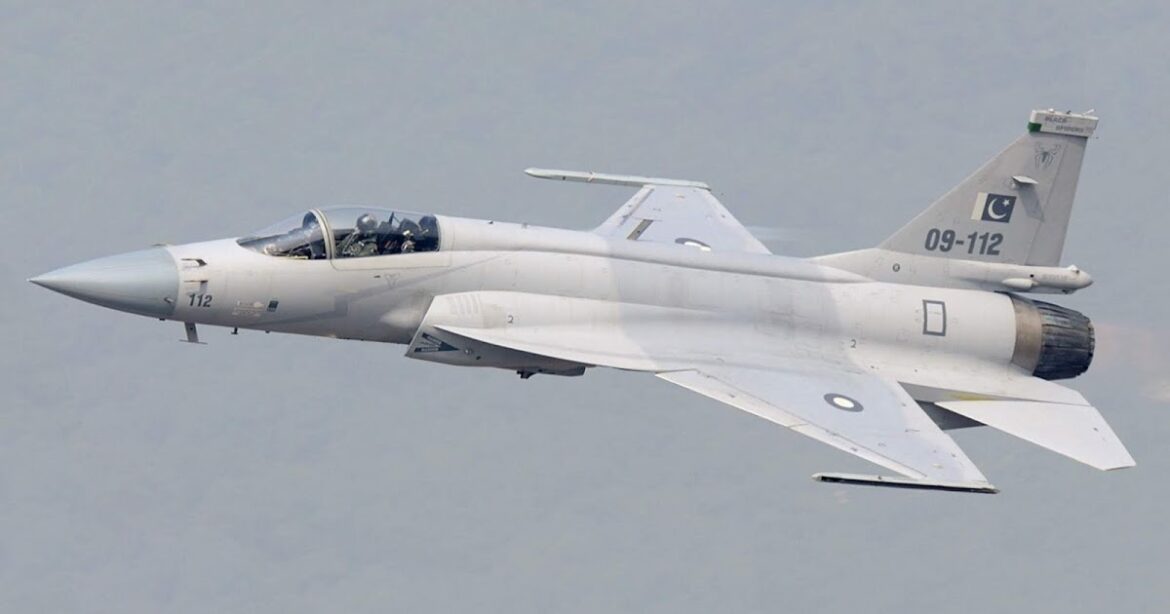
The Republic of Iraq and the Islamic Republic of Pakistan have finalised a deal for the sale of the PAC JF-17 Thunder Block III 4.5 generation mutirole fighter aircraft, to be built by the Pakistan Aeronautical Complex in Kamra, Punjab. The deal’s instrument is yet to be formally signed, and is pending a sure-fire passing of the defence deal’s bill from the Iraqi parliament this year.
Terms of Use
By reaching the website https://www.geetvhd.pk/ you are fully agreeing to the terms of use and all applicable laws and regulations. Without agreeing to these terms, you cannot access to the website content. The content on this website is protected by copyright.
To view the information on https://www.geetvhd.pk/ , you need to grant permission. According to the license, you can not
- Copy the material
- Use material for commercial or non-commercial purposes.
- Erase any notation from the material.
- Mirror or transfer the material to other servers.
The data available on Gee TV’s website has been provided “as is.” Without limiting the foregoing, Gee TV explicitly rejects and negates all other warranties.
Furthermore, Gee TV offers no warranties or claims regarding the precision, likely outcomes, or reliability of the use of the contents on this website or related to such materials or on other websites that may be linked to this website.
The content on the Gee TV website might include typographical, photographic, or technical mistakes. Gee TV accepts all responsibility for the reliability and comprehensiveness of the information on this website. The data provided on the https://www.geetvhd.pk/ website may change at any time without advance notification. Gee TV does not promise to update the content, though.
The incorporation of any link does not indicate endorsement by Gee TV, and using any such linked website is at the user’s own risk. Gee TV does not review all of the sites that have links to this website and is not responsible for the material of any such linked site.
These website terms of use are open to change at any moment without being notified by Gee TV. You consent to be bound by the current revision to these terms of use by using this website.
These terms are governed by and construed by the laws and regulations of the state, so you exclusively submit to the jurisdiction of the courts.
Punjab Agriculture Department and Better Cotton Initiative Partner for Cotton Crop Sustainability
Signing Ceremony for Cotton Cooperation
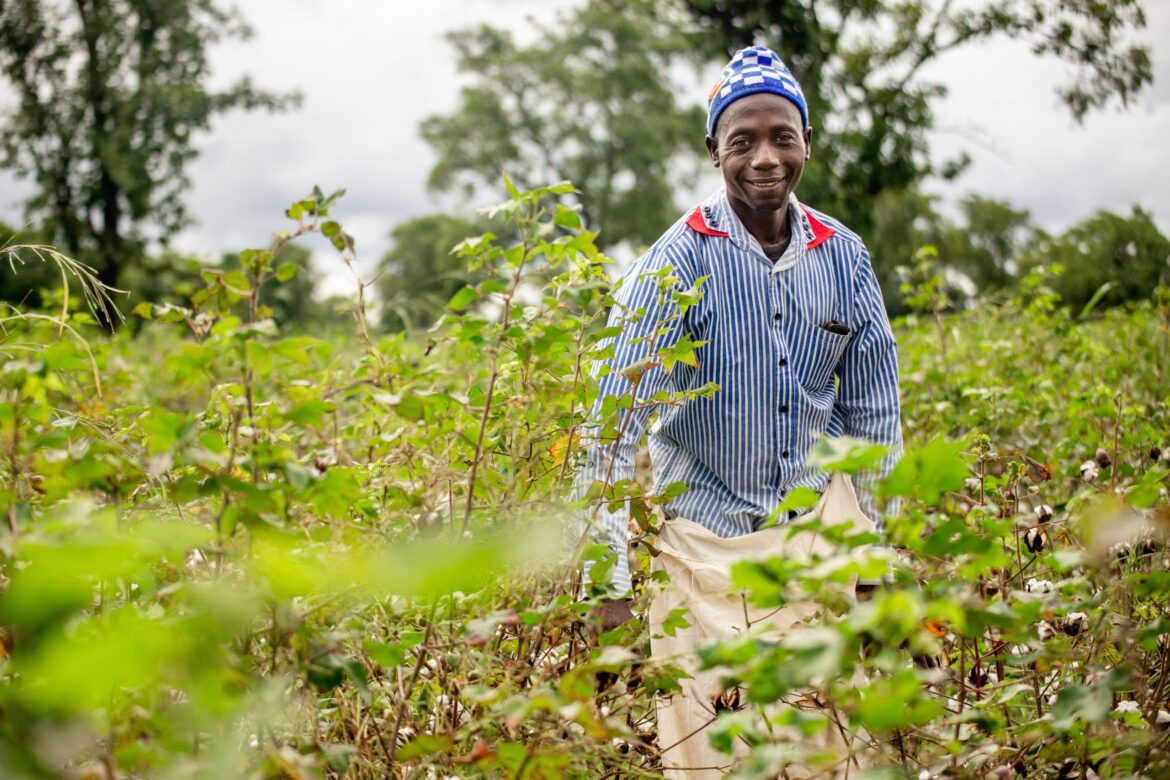
A signing ceremony “commitment of cooperation” was held today at the Civil Secretariat Lahore between Agriculture Department, Punjab, and Better Cotton Initiative, Pakistan. Under this agreement, they will take steps for better management of cotton under the joint strategy to increase per acre yield of cotton and also to improve the quality of yarn. Secretary Agriculture, Punjab Iftikhar Ali Sahoo, Director General Agriculture (Extension) Dr. Anjum Ali, Senior Advisor Better Cotton Initiative, Pakistan Dr. Muhammad Shafiq, Chief Planning and Evaluation Cell Rana Mahmood Akhtar, Director Agricultural Information, Punjab Muhammad Rafiq Akhtar and other officers and Stakeholders participated.
Speaking at the event, Secretary of Agriculture, Punjab Iftikhar Ali Sahoo said that the economic development of Pakistan is related to cotton. Punjab province accounts for nearly 70 percent of the country’s total cotton production. This year, due to the special interest of the Present Government, more than 4.6 million acres of area has been brought under cotton cultivation.
After many years and the agriculture department is working closely with the farmers to achieve production target. The revival of cotton is a big challenge, for which, all stakeholders have to work together. He further said that this agreement between Agriculture Department and Better Cotton Initiative, Pakistan will prove to be an important milestone for the growth and sustainability of cotton. The joint strategy and technical guidance of both stakeholders will lead to better management of cotton. It will not only increase per acre yield but also improve the quality of cotton.
The Impact of Climate Change on Cotton Production in Punjab
The impact of Climate Change on Cotton Production in Punjab has a profound effect. There is a need to discover new cotton varieties that can tolerate high heat and water deficits. On this occasion, Director General Agriculture (Extension) Dr. Anjum Ali said that this agreement will provide better technical guidance to farmers under a comprehensive strategy for higher production of cotton. He further said that disproportionate use of fertilizers in cotton crops by 28%, water shortage by 51%, weeds by 52%, and attack of harmful insects by 36%. It lead to a reduction in production and to control these problems, now both stakeholders will work side by side.
On this occasion, Senior Advisor, Better Cotton Initiative, Pakistan Dr. Muhammad Shafiq said that Pakistan has the 5th position in cotton production at the international level. And it accounts for 55 percent of the foreign exchange. Better Cotton Initiative, Pakistan will provide possible support for the implementation of the action plan of the Agriculture Department for the growth and sustainability of cotton in the province. It provide facilities for all activities of agricultural extension workers for the technical guidance of cotton farmers.
Parliamentary or Presidential System of Pakistan
Pakistan currently has a parliamentary system of government and is experiencing numerous issues. The current state of Pakistan cannot be attributed to the administration or the system. A nation functions best when the public and the government work together. In a democracy where everyone has the right to vote. Instead of electing a president, the people choose their own representatives in the legislature.
Pakistan’s government and constitution have undergone several changes. Observing the various governments that Pakistan has experience throughout its history. The legislative system of government was introduced more hastily than the executive. There is no opposition to control or overturn the decision in a presidential form of government. The president serves as both the head of state and the head of government. Under the direction of the president, the executive branch creates and applies all laws and regulations. Speaking of the presidential system, the very well-known Ayub Khan assumed power in Pakistan on the grounds that the country’s citizens lacked the necessary literacy to know who to vote for. People were never content with his administration. He outraged America for using the forbidden weapons against India supplied by America itself. pakistan’s parliamentary or presidential system of government is good.
Transformative Leadership in Pakistan
Later in 1969, Yahya Khan was in charge as Pakistan’s president and worked on his own set of policies for his own gain. He performed work for the country’s welfare, but the division of East Pakistan as Bangladesh was his government’s most controversial decision. General Zia ul Haq took office as Pakistan’s president in 1978. In addition to adding religious act compliance requirements and legal penalties, he also significantly improved the economy. He proposed the idea of increasing privatization. People were not happy with his suppression of the press and journalists, his persecution of protestors, and his Hudood Ordinance’s imprisonment of rape victims for Zina.
Following a protracted period of Parliamentary rule. Pakistan once more fell victim to martial law, and General Pervez Musharraf assumed the office of president, in 2002. He was the first military leader to accept Supreme Court-issued laws. Because he believed in the democratic system, he consented to free and fair elections in 2002. in previous we discussed the pakistan parliamentary or presidential system of government.
Presidential Challenges and Political Turmoil
A steady rise in bomb assaults was note throughout his time, and terrorism was at its height. In 2008, Pervez Musharraf resigned in order to defend himself against the Article 6 penalty proceedings before the hearing. None of the presidents since 2008 have taken office after his resignation.
Even though Yahya Khan’s administration saw significant prosperity, the country suffered a great loss when East Pakistan was lost. During any presidential term, no significant reforms or developments seen. However, there was never a catastrophe like the one Pakistan is facing today on the government level. Since every party is fighting to lead, no matter what downfall it is bringing to the country.
Opposition to the parliamentarian system of administration. In this system in which the prime minister is the head of state chosen by the populace. The leader of a political party with the majority of the popular vote is the prime minister. The opposition consists of members of the ministry from the opposing party with the less successful majority. They have the right to object to and contest any legislation the prime minister introduces. When discussing the history of Pakistan’s Parliament, we may see some highly well-known individuals and their reforms.
History of Pakistan parliamentry system
here we discuss th history of pakistan’s parliamentary or presidential system of government:
Liaquat Ali Khan, Pakistan’s first civilian prime minister (1947), was sincere and dedicated to improving his nation.
Zulfiqar Ali Bhutto, head of the Pakistan Peoples Party and the nation’s first civilian president eventually rose to the position of prime minister. He initiated a nationalization program and enacted a number of new policies. He gave the nation new optimism, and numerous effective reforms in the areas of trade and transportation. Education, the financial sector, and also privatization were seen.
Benazir Bhutto, Pakistan’s first female prime minister, accelerated the installation of power in rural regions. And also while inflation and the unemployment rate rose. She mostly advocated for women’s rights, although significant advances weren’t seen.
Nawaz Sharif’s Leadership and Challenges
Nawaz Sharif, the PMLN leader, gradually accelerated liberalization, deregulation, and privatization. His administration launched a number of sizable initiatives, such as the orange train, metro bus service, metro stores. And All of which are still operational and providing benefits to the public. He strive to improve infrastructure and built strong ties with China, which help our nation’s important projects get complete. Despite the fact that he oversaw periods of significant development. He was twice accuse of corruption and dismiss from his position as prime minister. Despite all allegations, his party continues to hold the balance of power and is still in charge of the nation.
Imran Khan’s Challenges and Government Comparison
Imran Khan, the PTI chairman, was demoted from prime minister when his party lost the popular vote. During his administration, the rate of inflation growth was extremely high. He enacted a number of new taxes and regulations that angered the populace. The majority of young people still support him and are in his corner, nevertheless.
Compare to the presidential government, a great deal more development effort has seen during the parliamentary government. A number of crises also rise in number when improved conditions prevail. In both systems, where improved reforms have been implemented. There have also been significant losses, therefore there is little significant difference to be seen. There is therefore always terrible where there is good. However, the state must continue to run on a single system for the entire nation.
Since the opposition is permitt to reject any idea that the administration introduces under parliamentary governance. This encourages democracy and grants others the freedom of speech. Therefore, the Prime Minister cannot decide the country’s future on his or her own.
Since both parties consistently or frequently disagree with the decisions of the person in power. It does increase the number of disagreements and conflicts between them. It also prevents them from completing tasks necessary for the betterment of the nation. In order to present a distorted image of them to the public.
Empowering Citizens for Systemic Change
However, it still performs better than the presidential system, where the opposition party’s stance on public order is irrelevant. Because the government cannot accomplish anything on its own without the support of the people, we must all improve ourselves and offer our services in order to create a better system for the nation. Instead of waiting for the good to arrive, let’s show the system what we are good at. It doesn’t matter what kind of government is in place; what matters are the ruler, the rules, and how strictly they are enforce. Bribery, nepotism, corruption, and unemployment must be eliminate for the country’s growth rate to increase.
Having taken a plunge during much of the past two decades. The Pakistani cinema industry has witnessed a revival after suffering a steep decline during the 1980s. Since 2012, The movies produced by the Pakistani cinema have received wide acclamation and positive reviews in the realm of entertainment and documentary films from domestic and foreign audience. Filmmaker Sharmeen Obaid Chinoy won two Academy Awards (Oscar) for her two documentary films. Entitled Saving Face and A Girl in the River: The Price of Forgiveness, produced in 2012 and 2016 respectively. Similarly, entertainment movies like Khuda Kay Liye, Bol, WAAR, 3 Bahadur, Wrong No., Actor in Law, Bin Roye, Punjab Nahi Jaungi, Na Maloom Afraad, and lately Ali Zafar’s Teefa in Trouble bagged PKR 300 million on the box office. With these cumulative developments a new wave is rising in the Pakistani film industry.
History of Pakistani cinema
The history of pakistani cinema in Pakistan is a continuation from the undivided India under the British rule (1857-1947). After establishment in 1947, there was a time when Pakistan produced an average of 80-100 movies annually. Which started to witness a decline during the decade of 1980s. A major shortcoming of the cinema industry during the 1980s was the stereotypical projection of folk Punjabi and Pashtun cultures, coupled with poor scripts, dramatic acting and use of inferior technology in production.
Similarly, social taboos and religious conservatism discouraged talented youth to opt for the cinema industry in Pakistan. The subsequent decline in the production as well as viewership of Pakistani cinema during the 1980s. Constrained many cinema owners to demolish their cinemas and replace them with alternative income sources. Such as commercial plaza, residential apartments etc.There are numerous reasons to explain this revival. For example, the scripts of the recently produced movies have improved considerably. Apart from being less glamorous, as witness in the case of Bollywood movies. The recent Pakistani movies are tailor for family entertainment.
Revitalizing Pakistani Cinema: Policies and Prospects
Moreover, there has been a revolution in terms of hiring of the cast of the newly produced movies, where highly educated and groomed people are joining the film industry. Similarly, film scripts revolve around stories which mainly portray the reflection of the society. Taking cognisance of the recent growth in the Pakistani cinema, the former federal government announced the country’s first ever Film Policy in February 2018 which offered unprecedented incentives to the filmmakers. Some salient points of the policy include offering 70 percent rebate in taxes to filmmakers for shooting in Pakistan.
Emption of import duty on film equipment and sales tax on the films; and establishment of Film Finance Fund to the tune of PKR 5 Billion for the filmmakers. Another wise decision was to encourage the screening of Pakistani films and dramas in China, which can fetch handsome returns. Given prospects for revenue generation by the Pakistani cinema industry, the country needs to take certain important steps to realise its full potential.
Growth and Inclusivity of Pakistani Cinema
The government should incentivise and woo local investors to construct cinemas with modern day amenities. Government in major cities needs to offer support for construction of cineplexes. Such a development will increase the number of screens in Pakistan. Consequently, film makers will upscale their productions of films. It will also help in generating financial surpluses for film makers, which will help ameliorate the technical and production prowess of Pakistani film industry. However, the growing industry will also need to ensure that its rise comes by creating conducive environment for artists and creators, irrespective of gender, ethnicity, religion and creed. Taking lessons from the #MeeToo movement, the industry will need to put in place a strong professional ethical culture for men, women and trans-people in the industry.
Along with these efforts international outreach needs a revitalised focus. Two developments, which may have remained under appreciated by film makers at Pakistan, is that in last few months two Indian movies in China surpassed revenues generated at their home market (India). The first is Secret Superstar and Hindi Medium. So far, the latter has generated nearly Indian Rupees (INR) 200 crores ($23.82 million) out performing its performance at the domestic box-office of about INR 70 crores and whereas Secret Superstar earned an unprecedented amount of US$119 million.
Pakistani Cinema and International Markets
Previously, Amir Khan’s Dangal earned $205 million in China. Taking a lesson from this, Pakistani film makers can benefit from Bollywood’s penetration. This is for three reasons; firstly, the cultural nuances between the two South Asian countries are quite similar, this also stands true for dramatic expression, humor, and music. Thus, relating with films from Pakistan will not be much of a challenge. Secondly, China is a huge market with nearly 8000 screens spread across the country, at the operational level. This creates a huge potential for generating surplus market revenue. Thirdly, the ongoing collaboration needs scope for cultural exchange. And taking Chinese distributors on board for screening quality Pakistani films for film industry’s revival at home and abroad and exposure of Pakistani films in China. Lastly, as part of its international outreach India also needs to be convinced to reciprocally allow Pakistani films to be screened in India.
Pakistan cinema and Indian Market
Since, Indian movies are screened in Pakistan such an exchange will allow Pakistani film makers to benefit from the Indian market also. To this end, the latest news of Fahad Mustafa and Om Puri’s film Actor in Law being screen in India is a welcome development. Along with these efforts international outreach needs a revitalised focus. Two developments, which may have remained under appreciated by film makers at Pakistan. In last few months two Indian movies in China surpassed revenues generated at their home market (India). The first is Secret Superstar and Hindi Medium. So far, the latter has generated nearly Indian Rupees (INR) 200 crores ($23.82 million) out performing its performance at the domestic box-office of about INR 70 crores. And whereas Secret Superstar earned an unprecedented amount of US.
Taking a lesson from this, Pakistani film makers can benefit from Bollywood’s penetration. This is for three reasons; Along with these efforts international outreach needs a revitalised focus. Two developments, which may have remained under appreciated by film makers at Pakistan, is that in last few months two Indian movies in China surpassed revenues generated at their home market (India). The first is Secret Superstar and Hindi Medium. performance at the domestic box-office of about INR 70 crores and whereas Secret Superstar earned an unprecedented amount of US.
Challenges and Transformation of Pakistani Cinema
However, to turn film industry’s current small success into meaningful ones, it is now up to those that are already part of it. And also those considering joining it to turn Pakistan film industry’s potential into a sustainable success. But pakistani industry less successful than indian the reason is stories, dressing, acting. And so on everything was liberal and as many conservatives would say “unholy and vulgar”. Movies like Society Girl and Dillagi discussed love, lust, prostitution, non-muslims and so on openly. Many Pakistani films were based on the lives of non muslims. We even had famous non muslim stars ruling the Urdu Cinema like Shabnam, a hindu woman from Bangladesh.
To stop this spread of liberalism and “vulgarity” and to create a country “filled with god” to attack the “godless” soviets. Urdu cinema was but under extreme pressures. Actors/Actresses stoped their work, producers stoped funds. Even the money which the government use to provide as grants to people seeking various artistic events, films, and etc was cut off. This was the major reason for the decline of our cinema, persecution. The only reason Punjabi cinema was publicize and allow to run so much was because it had a focus of religion. And also stayed away from what the conservatives considered “vulgar”, and Zia enjoyed it. Thus Punjabi cinema replaced our national urdu cinema from the 70’s to about the late 90’s. Slowly in the 2000’s Urdu cinema began to reemerge.
Resilience and Achievements of Pakistani Cinema
The reason our cinema hasn’t been able to get back on its feet is not because we cannot accept new ideas, not because we are not open minded or anything. We had a dull period of almost 10 years where we had little to no films. Our cinemas decreased, and now only about 30–40 cinemas remain of the original 500 in the region. This gives Pakistani films little leeway to actually make much profit in such ventures, and who works without earning. We all have to feed ourselves at the end of the day. Slowly the number of cinemas has begun rising again as new films pour out.
Also i want to note that although our film industry is small as compare to India. Do not believe that to mean it isn’t strong. Two Pakistani movies had been taken by top schools in the US, Yale and Harvard, to be studied by their students. These movies were released in 2015. They were Moor and Manto. Pakistani films have even beaten indian films, sometimes, in movie screening awards on indian land. Pakistani films have fought over to Pakistan the likes of Nandita Das, Kieron Kher and many other names from India. Just as Bollywood has called a number of Pakistani singers/actors to its industry as well. The newest movies coming out from Pakistan is also being co produce by Barbra Streisand an American Emmy Winner. And even Sharmeen Obeid Chinoy has won two oscars for her documentaries.
We deal with fashion every single day of our lives. A popular style or practice, particularly in regards to apparel, footwear, accessories, makeup, body piercing, or furniture, is generally referred to as “fashion.” Fashion is a dynamic industry that has seen numerous modifications since it first emerged in the past. Fashion refers to both dominant behavioral tendencies and a distinctive and frequently habitual trend in a person’s choice of clothing. Celebrity fashion in general is push by their attire. Popular pop artists, movie stars, or athletes may be among them.
People typically copy the most recent fashion trends used by these celebs. The most recent designs by textile designers are frequently refer to as fashion. Costume, a more technical term, has gotten so intertwined with “fashion” that it is now only used in certain contexts. Such as fancy dress or ceremonial attire. In contrast, “fashion” refers to clothes more broadly and the study of it. Fashion can include both feminine and masculine elements, yet certain styles lean ambiguous.
Teenagers are probably the most interested in fashion of every age group. The way of life of a teenager is greatly impact by appearance and fashion. They admire fashion because it reflects who they are or want to be the world. Teenagers have entered a variety of personalities. Thus there are outfits available in a variety of shapes, sizes, shades, and fabrics.
The clothes that people choose as they get older influence how they perceive themselves. Teenagers use fashion as a means of self-expression, peer interaction, and social standing.
Teenagers use their hair and clothing to convey who they are. Teenager use their clothing as a means of expressing their distinct personalities and how they want to be seen. Teenagers can be made to choose their attire carefully in the meantime with a broad variety of options and helpful recommendations. Such as those from a fashion blogger or social media influencer.
Young people frequently copy what they see others wearing, provided it appears trendy or “in style”. Teenager quickly adopt rapid fashion in the hope to fit in. As the seasons and fashion trends change, so do the wardrobes of teenagers. Let’s examine the reasons why teens are so concerned with fashion.
Peer pressure has a big impact on things like drug and alcohol misuse, fashion and street style, the type of friends on has, and academic success when one is a teenager. Peer pressure, of course, has both positive and negative aspects.
Teenagers often dress in a particular ways to avoid being teased and humiliated by their classmates. They worry that by dressing improperly, they would lose their friends. Teenagers in America typically go hopping with friends or seek advice on how to dress for special occasions like birthday parties. Teenager who feel the desire to somehow fit in are influence by those around them. They can feel like they belong to the globe by copying the latest fashion they observe around them. Teenagers utilize fashion to maintain friendships and increase their self-esteem via “mirroring”.
Youngster sometimes dress in a way that appeals to the other sex. youth prefer to feel liked, and one way to give them the attention they so desperately seek is through fashion, as is well known. Teenagers also have a tendency to fall in to peer pressure to dress in the newest trends. Teenagers frequently struggle with peer pressure. If one does not wear the newest fashion trends, their friends may often taunt them and even try to exclude them from their social groups.
The team most impacted by this problem is teenage girls. The media and publications have an effect on women’s attire and a girl’s physical appearance in some way. Teenagers will go to any lengths to resemble a thin model or an instagram influencer who features on a magazine cover. Teenage females’ lifestyles have changed significantly as a result, and harmful behavior’s including eating disorders have increased. As more factors in a teen’s body image issues is the internet. As a social media influencer, comparing themselves to what you see online can have an adverse effect on body image, which is closely tie to fashion and style.
Teenagers can learn about new trends via magazines and other media, which helps them decide what to buy and what not to buy. Particularly in the United States, youngsters still like reading fashion magazines. These shows and magazines have a significant impact on the lifestyle and the sense of style of teenagers because the majority of the teenagers purchase clothing after examining the most recent publications. Teenagers clothing decisions are heavily influence by magazines.
Most fashion periodicals appeal to teenagers, particularly female teenagers. For the purpose of attracting young females, magazines would frequently dress up a celebrity or a fashion influencer for their cover images. The companies and shops that celebrities use to buy their fashionable clothing are then support by these periodicals.
Teenagers look up to and admire their most beloved celebrities. They take their cues from them when dressing. Teenagers will purchase the exact same clothes to mimic their favourite celebrities when they see them wearing something they like. They will then display their clothing to friends. Teenagers follow the fashion of their favourite celebrities by watching a variety of reality shows and attending red carpet events. They even copy the hairdos of famous people. Teenagers discover their identities in this way. Celebrities may not directly sway their audiences’ opinions, but they do have an indirect impact. When a celebrity or Instagram influencers publically recommends a piece of apparel, it fosters acceptability among the public and improves the brand’s reputation as a whole.
Teenagers are naturally starting to establish their independence and form a sense of self as they mature. Teenagers communicate their identities and inform the world about themselves in a variety of ways, one of which is through their sense of style.
Conclusively, fashion is a very important factor as far as teenagers are concerned. They will do all they can to make sure that they spot the latest styles. At times, pressure from friends may compel teenagers to do whatever it takes to acquire fashionable items for themselves. Therefore, fashion has its benefits and negative consequences for teenagers.