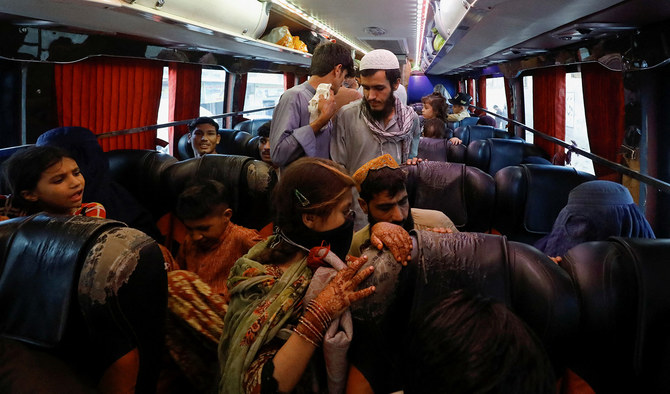
Illegal residents of foreign nationals have one day left in the given deadline. According to sources, the screening and mapping of illegal residents in various populations for the repatriation of illegal immigrants has entered its final stages. The verification of the documents available to foreign individuals is ongoing. In the initial phase, action will be taken against those who do not possess documents. Holding areas and temporary camps have been established for the apprehension of illegal foreign nationals, with FIA personnel busy at the registration desk in each camp. The registration desk is linked to a rare software border management system.
The mobile registration service for the Unique Income Support Program is expected to be activated by November, according to the Secretary of the Unique Income Support Program, Aamer Ali Ahmed.
Secretary Aamer Ali Ahmed stated that to facilitate the registration process for eligible beneficiaries of the Unique Income Support Program, who are located in remote and far-flung areas of the country, the mobile registration service will possibly be operational until November. This will make it easier to streamline the registration process for residents of remote areas.
According to the Secretary, the mobile registration centers will provide facilities for the registration of eligible women residing in distant areas through mobile vehicles. A total of 25 mobile vans are being included in the National Social Economic Registry for mobile registration centers, which will serve people who have limited access to registration facilities.
In his statement, he mentioned that 19 mobile registration centers are being set up in Balochistan, five in Sindh, and one in Islamabad. Secretary BISP (Benazir Income Support Program) also stated that the process of activating the mobile vans, which started in August, has reached its final stages. For the first time in Pakistan’s history, individuals with special abilities and transgender individuals have been included in this program, and they are eligible to register.
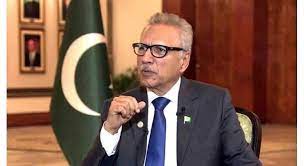
In a video message on Sunday, he said, “I extend heartfelt congratulations to President Recep Tayyip Erdogan on the auspicious occasion of the 100th anniversary of the Republic of Turkey, which was founded under the visionary leadership of Mustafa Kemal Atatürk on October 29, 1923.”
President Alvi emphasized that the relationship between Pakistan and Turkey goes way back, and even before the establishment of both countries, the people of this region and the Turkish people had a strong bond. He shed light on the fact that both countries’ strong relationship is evident not only from their historical ties but also from the assistance sent to the region with military aid during the Russo-Turkish War, to which Turkey responded positively.
President Alvi acknowledged the tremendous progress made under the leadership of President Recep Tayyip Erdogan and the current Turkish leadership’s excellent handling of issues in the Muslim world.
He stressed that the excellent friendship between Pakistan and Turkey is based on mutual understanding and cooperation on global issues, including the Kashmir issue. He praised President Erdogan for taking a courageous stance on recent violent events in Gaza and expressed hope that the Muslim world will also show strong support on the Gaza issue and the Kashmir issue.
President Alvi also reminded the world that Muslims have historically welcomed people of all religions in places like Andalusia and Anatolia. He expressed his belief that Turkey has made significant progress under the leadership of President Erdogan, and this is a proud moment for both nations.
He concluded by emphasizing the need to express the deep brotherly bond between the two nations, which is eternal and will continue to thrive.
Astrology has fascinated humans for centuries, offering insights into our personalities, relationships, and life events. One of the fundamental tools in astrology is the birth chart, also known as the natal chart. In this article, we will delve into the fascinating world of birth charts, how they are constructed, and how they can be used to make predictions about our lives. We will also explore the significance of birth stars in Vedic astrology and their relation to gemstones.
What is a Birth Chart?
A birth chart is a snapshot of the celestial positions at the exact moment of an individual’s birth. It represents a unique cosmic blueprint that outlines the planetary placements in the zodiac signs and houses. These elements interact to shape an individual’s personality traits, strengths, weaknesses, and life experiences.
Constructing a Birth Chart
To construct a birth chart, an astrologer needs the date, time, and location of an individual’s birth. Using this information, the astrologer calculates the positions of the planets at that specific moment and creates a personalized birth chart. The chart consists of twelve houses representing different areas of life and twelve zodiac signs representing distinct personality traits.
Elements of a Birth Chart
Planets: Each planet represents different aspects of our being. For example, Mercury governs communication and intellect, while Venus symbolizes love and relationships.
Zodiac Signs: The zodiac signs provide further insight into an individual’s personality traits and characteristics. For instance, Aries signifies courage and assertiveness, while Cancer represents sensitivity and nurturing.
Houses: The twelve houses in a birth chart correspond to various aspects of life, such as career, relationships, and spirituality. Each house holds unique significance in determining specific life areas.
Birth Chart Interpretation
Astrologers interpret birth charts by analyzing the relationships between planets, signs, and houses. This analysis helps uncover patterns, strengths, challenges, and potential life events. By understanding these dynamics, individuals can gain self-awareness and make informed decisions.
Predictions and Forecasting
Birth charts can also be used for predictions and forecasting. Astrologers analyze planetary transits and progressions to anticipate upcoming opportunities or challenges in an individual’s life. These insights can assist in making informed choices and preparing for potential outcomes.
Birth Stars
In Vedic astrology, birth stars, also known as nakshatras, play a significant role in determining an individual’s personality and life events. There are 27 nakshatras, each with its unique set of characteristics and ruling planets. The nakshatra in which an individual is born is determined by the position of the moon at the time of their birth.
Significance of Birth Stars
The nakshatras hold immense significance in Vedic astrology, as they are believed to influence an individual’s mental, emotional, and physical well-being. Each nakshatra has its ruling deity, symbol, and qualities that shape an individual’s personality traits and life path. Astrologers use the position of the moon and the Nakshatra to determine an individual’s strengths, weaknesses, and potential life events.
Birth Stars and Gemstones
Gemstones are often associated with birth stars in Vedic astrology. Each nakshatra has a corresponding gemstone that is believed to enhance its positive qualities and mitigate negative influences. For example, the Hasta nakshatra is associated with the planet Moon and is believed to enhance creativity and intuition. The corresponding gemstone for Hasta is Pearl, which is believed to strengthen these qualities.
How Gemstones are Chosen
Astrologers choose gemstones based on an individual’s birth chart and the position of their ruling planet. The gemstone is believed to enhance the positive influences of the ruling planet and mitigate its negative effects. For example, if an individual’s ruling planet is Mercury, they may be advised to wear an emerald to enhance their communication skills and intellect.
Benefits of Wearing Gemstones
Wearing gemstones is believed to have numerous benefits, including enhancing mental clarity, improving physical health, and promoting spiritual growth. Gemstones are also believed to enhance specific qualities associated with the corresponding nakshatra and ruling planet.
Conclusion
Birth stars play a significant role in Vedic astrology, offering insights into an individual’s personality traits and life path. The corresponding gemstones for each nakshatra are believed to enhance positive qualities and mitigate negative influences. While astrology and gemstones may not be scientifically proven, many people find value in their use as tools for self-awareness and personal growth.
Renowned poet, playwright, and novelist Alexander Pushkin holds a place in Russian literature similar to Geoffrey Chaucer in English literature and Walt Whitman in American literature. These three writers introduced modern themes and techniques into their respective literatures, bestowing their unique national identity on their works. Alexander Pushkin lived only 38 years, but in the following centuries, luminaries like Gogol, Lermontov, Turgenev, Dostoevsky, Tolstoy, and Chekhov shone brightly under his influence.
Alexander Pushkin created a drama titled “Queen of Command.” It is a story of a greedy military officer in the Tsarist Russia, on a quest to uncover the secret of a wealthy old lady’s fortune. Rumor has it that the old widow had concealed her wealth within a deck of playing cards in a unique order. The military officer, holding a pistol, intrudes into the old lady’s house one night. He manages to extract the secret of the cards, but kills the lady in the process. The officer, wanting to enjoy the fortune, decides to play cards but is baffled by the shuffled order, ultimately losing everything.
This allegorical story can be applied to any era, demonstrating the consequences of greed and the helplessness of the common people. Our country’s history is still being played in shadows, where the common man is not destined to share the rewards.
The role of a journalist is to illuminate the difference between shadows and light, but some media outlets are continuing to operate underhand, while certain pens have been deprived of their radiance. As Shakespeare once said, “What’s in a name?” We would answer, “A lot.” The power of the spoken word, derived from the sweet lips of the Queen of Command, has sculpted the social consciousness with thoughtful words.
In the 1946 elections, Bengal was a united province, where the Muslim League secured a decisive majority. The leader of Bengal’s Muslim League, Huseyn Shaheed Suhrawardy, was not only deprived of becoming a member of the constituent assembly but also subjected to a citizenship investigation. Prime Minister Liaquat Ali Khan called him a traitor. The sin was not only in becoming a constituent Assembly member but also in his citizenship. Fazlul Haq, the one who presented Pakistan’s resolution, made a government in 1954 with a two-thirds majority, but he was labeled a traitor. His party was cursed by Bhutto for decades. In the freedom movement, Abdul Ghafoor Khan remained steadfast against foreign rulers for thirty years. We kept him under house arrest for seventeen years.
Ask the students of literature in our country if they know about Sheikh Ayaz, Gul Khan Nasir, Ghani Khan, Major Ishaq, the writings of Subho Gian Chandani, or Qalandar Khan Mumtaz. Do they know that Rais Mir Bakhsh was a prominent Sindhi fiction writer? Will they recognize the contribution of the former Chief Minister of Balochistan, Dr. Malik as an important Balochi fiction writer?
In General Zia’s dark years, Bhutto’s name was banned from newspapers and publications. According to Etimad-ud-Din, the mention of monsoons and swarms of locusts was restricted. Radio broadcasts hinted at the arrival of rain, but farmers faced locust swarms.
This happened until Mr. Lateef’s song “Lahore Lahore Aye” became a hit. In those days, news channels and print media circulated the saying “Mister Ten Percent” to avoid naming the then Prime Minister. On November 22, 2012, four senior military leaders’ names came forward for the post of Army Chief. According to the procedure, one of them was appointed. The honorable title bestowed upon them was “Hafiz Sahab.” These are the people who declared Yahya Khan as the creator of the Islamic Constitution. These are the individuals who addressed General Zia-ul-Haq as the “Man of Faith and Truth.”
The difference between a journalist’s conscience and the Queen of Command’s bewitching words is remarkable
Unconvincing chants for the privatization of struggling state-owned Enterprises (SOEs) are echoing in Islamabad. With approximately 215 SOEs, of which 170 are commercial entities employing 475,000 individuals, the majority have struggled to achieve even a five percent return on their assets for three consecutive years.
Between FY2013-14 and 2018-19, the top 10 loss-making SOEs amassed losses exceeding Rs2.1 trillion, with the government injecting Rs2.5 trillion between 2018 and 2021, including a substantial subsidy of Rs1 trillion.
Privatization is considered an instrument for a more deregulated, market-based economy, but a significant portion of these SOEs may need to be liquidated rather than privatized in their current state.
An example is Pakistan International Airlines (PIA), which is poised as the first candidate for privatization, having accumulated an astounding loss of Rs713 billion and losing $7.1 billion since 2012.
PIA owns only 19 operational aircraft (compared to Air Blue’s 12), with 15 of them leased, incurring a monthly cost of $5 million. Moreover, its asset value falls short of covering its liabilities.
To proceed with PIA’s privatization, the government acknowledges the need to segregate non-core functions and assets, address its debt liabilities of nearly Rs300 billion, mostly backed by government guarantees, and transfer them to another corporate entity. The core assets marked for sale include routes, landing rights, core engineering services, and air service agreements.
However, there is a need for greater clarity on what is being sold as assets, their expected versus actual market value, and the perceived liabilities for the buyer.
Highly valued assets include routes, landing rights at major international airports, and time slots owned by PIA. The potential value of PIA’s slots today remains uncertain.
Determining the value of PIA’s 19 aircraft and the feasibility of taking over leased aircraft with outstanding liabilities is a complex matter. The government may need to reach settlements with lessors rather than resort to costly arbitration.
Properties owned or rented by PIA may not all be retained by the buyer for operational efficiency, potentially leading to numerous property sales and office closures.
An important question arises regarding the future of flights to destinations not served by private airlines. Would the private sector take over these routes, or would a transitional subsidy be necessary?
The buyer would also scrutinize the workforce, focusing on the excess number of employees, their skill set, and pension liabilities. Expecting the government to shoulder pension liabilities for retired employees, the buyer’s decision to retain or lay off workers would significantly affect the offer price.
Foreign investors’ interest in the transaction may be influenced by Pakistan’s image in terms of security, politics, economics, and regulations compared to global alternatives. Negotiating taxes and other concessions would also be a consideration.
The divestment of PIA can align with the principles of privatization if carried out openly and transparently, with preparation to secure the best price and considering efficiency, market competitiveness, and the public interest.
The funds generated from this transaction should not be diverted to unproductive government activities or poorly designed mega-infrastructure projects. Instead, they should contribute to retiring debt and promoting fiscal reforms in accordance with the law.
These three references are very welcoming, but the question arises as to why these teachers, including women and men, have been protesting on the streets for weeks. Some authorities even have their students participating in this demonstration. Tear gas was fired at them, batons were charged, and they were brutally treated and thrown into police vans. So the question is, if none of this was happening, why did this protest come about, and why was the protest allowed to become so lengthy? If the rumors of corruption were debunked on the very first day, this spark would have been extinguished, and there was no need for teachers to endure this humiliation. This “Shirley” was undoubtedly somewhere, and it was so dangerous that not only the teachers but even people who love education were captivated by it, and their emotions were not unreal.
Corruption in schools means that parents will be demanded hefty fees, similar to private schools where only the children of the rich can enroll. If God forbid, this happens, this plan will deprive a large number of children of education. There was a time when Government College Lahore was the highest standard educational institution, where everyone was admitted on merit, and the fees were quite normal. Many of our elders have benefited from this institution. However, when it was converted into a university, the admissions and monthly fees increased to the extent that now the only merit for admission is having substantial money, and even a child has to pay fees on merit. If there is corruption in schools, then the poor children will never go to school, and thus, our literacy rate will drop even further.
The issue is not only about children and their education; teachers will also suffer greatly in the form of privatization. They will not receive the only economic support for their old age, which is a pension. In my opinion, this is the pinnacle of injustice. They are helpless. Where are they most affluent? What factories do they run? Which privileges do they have? To which affluent class are they related, which is provided with ample financial facilities during employment and after retirement? Their situation is like ordinary Pakistanis, who can barely manage two square meals. For God’s sake, don’t deprive them of this two-time meal!
And yes, the threat is not limited to schools; in the next stage, the “hunter’s eye” may also be on colleges. Then, those people who somehow decorate their children with the ornament of education, and later those children live a much better life in society or can live it, their hopes will also be shattered. I would request the authorities that if there is any design in someone’s mind, they should remove that design from some therapist; otherwise, nature itself does this job.
At first glance, it may seem like a routine incident, with news of it appearing in newspapers and discussions happening on social media. However, it hasn’t quite caught the attention of the general public. The incident revolves around Sher Ali, an assistant professor at Peshawar University, whose family has strong connections with the Pashtun culture. Recently, during a seminar, he asserted that the burqa or veil is neither a part of Pashtun traditions nor mentioned in Islam. According to him, according to medical science, a girl reaches puberty when her mind is mature, which happens around the age of 12, while a boy reaches puberty at 14. This indicates that girls mature earlier mentally. According to reports, after the seminar, Sher Ali and his family faced severe hardships in their community. People severed social ties with them, and they started facing harassment.
When the situation became more intense, local clerics, along with the district administration, forced Sher Ali to apologize and sign a statement in which he renounced his theories. He also wrote that he considered all scientific and intellectual ideas that go against Divine Law, such as Darwin’s theory of evolution, as false. This marked the end of the news.
People often ask why our country lacks a conducive environment for scientific inquiry. What’s the reason we cannot make any breakthroughs in scientific research and our names are absent from any scientific achievements? In response to this question, the liberal class tends to blame religious narrow-mindedness, and they argue that scientific research is only possible in a free environment, something not available in our country. They claim that whenever there’s research in the field of science, questions about religious beliefs will inevitably arise in the results. For example, controversies arose over religious beliefs following the results of the theory of evolution or the discoveries of Galileo and Copernicus, who clashed with the Church because of their scientific findings. Today, the entire world celebrates Galileo, but at that time, he was threatened by the Church. The religious class refutes this argument, claiming that there are open universities in the country where science is taught, people earn Ph.D. degrees in science, conduct experiments in laboratories, and the government has established numerous organizations to promote science. Did the clergy ever make a fuss over these institutions, demanding that scientific experiments be halted or protesting against the dissection of female cadavers with the help of male doctors in medical colleges? It’s clear that this never happened, and there’s no reason for it. Therefore, blaming the religious class for not having an environment of scientific inquiry in the country is entirely baseless.
Both viewpoints have their merits, but it seems that there is a consensus between religious and liberal classes that, in any case, the country lacks an environment for scientific inquiry. So let’s first examine what kind of environment exists in the country. For this, you don’t need to travel extensively. Just try to understand what motivates the state and society, what freedom of expression is tolerated, what the country celebrates, what it mourns, what is taught in educational institutions, what young people aspire to become in life, and what the general attitude and preferences of society are. It’s clear that we have achieved excellence in the things we encourage. For example, the entire nation is crazy about cricket, and the state also takes great interest in it. Even when the country was on the verge of bankruptcy, the Cricket Board organized the Pakistan Super League (PSL). Cricket is played in every street and neighborhood. Matches are held in schools and colleges. There is no special opposition from the religious class to this. This is why, despite the decline of the country, cricket has not declined. We are still part of the world’s top teams.
We can take the example of Jihad as well. When the state took charge and we waged “jihad” against the Soviet Union in Afghanistan, the superpowers faced defeat. The reason was that there was a jihad atmosphere throughout the country. Seminars were held; religious and political scholars extolled the virtues of jihad. The state encouraged it. The result was as expected.
When we say that there is no environment for scientific inquiry in the country, the reason is not solely religious narrow-mindedness. It is the general attitude and inclination of society and the state. The government and society do not oppose scientific research, but they don’t champion it either. If this were the case, Sher Ali, an assistant professor at Peshawar University, wouldn’t have had to make a statement renouncing his theories with district administration officials present. Yes, it’s true that no religious sect has ever protested against scientific laboratories. For this, we should be very grateful. But is merely protesting not enough? Scientific inquiry is impossible without a free environment. This environment can be created in two ways. first, by establishing government policies to make scientific discussion possible in the country without fear or hesitation. Second, by inculcating critical thinking among children at the school level. Currently, our schools, and even universities, lack critical thinking. These universities are merely degree-producing institutions where the most freedom they have is to invite religious scholars to ask them questions about the virgins in paradise. If no one has written an article on the methods of spending time with virgins in paradise, I’m willing to do it.
A prayerful trend was circulating on social media, blaming those individuals who have brought disgrace to Pakistan, and Allah Almighty has cursed them. Sheikh Rashid has revealed the truth now. Now it’s the turn of Roposh Miyan, Iqbal Iqbal, and Hamad Azhar, the youth’s real faces. Actually, on that day, there will be fireworks when Murad Saeed bursts out during a press conference. People are saying the journey from opposition to government is not easy. For that, one has to struggle systematically, show hypocrisy with everyone, confront every societal policy, stick to religious principles on financial decisions, and strictly adhere to ethical standards.
The party that claimed to end Nawaz Sharif’s politics by accusing him of corruption and theft has actually become a mockery now. When the Chairman himself becomes repententant of politics, the “Tanga Party” will not even find shelter in Multan. In response to Nawaz Sharif’s arrival, Imran Khan, playing the field at the youth level, is claiming that the opposition should also be given a chance. He is saying that he made a mistake on May 9th. People say that it was not just a mistake on May 9th; it was a great crime that ruined the country’s economy, politics, society, and culture. The issue is not just May 9th, but there are several May 9ths hidden behind it that destroyed the nation’s prosperity.
No one is saying that there was a mistake, but there is a great crime involved in it. He not only defended corruption and theft but actively participated in this act. He spread corruption and theft as the national anthem and caused the country’s economy to collapse. People say that in the case of a mistake, there is a huge increase in hatred, self-pride, stubbornness, and blind imitation in the minds of young people. There is a need to work for several years for the restoration of these young people and national norms.
The people’s economy will work with full determination to reduce the decrease in purchasing power and inflation. The number of investors, including China, has gone, but he will bring them back. However, the people are asking when they will continue to stay in other countries’ gardens. And when will Nawaz Sharif stop spreading the thorns of others? Is it just Nawaz Sharif’s contract that he repairs the economy day and night, gaining the trust of the people, the stock market, capitalists, traders, and foreign investors?
When the country’s economy returns to the right track, what will be the new experiment for promoting a carefree country? How long will the one who saves the country be blamed with new accusations? How long will the perpetrators be forgiven instead of being held accountable? How long will the culprits be protected, and will the open injustice continue to be closed? The real crimes are those that it’s time to commit to them forever.
Israel, the most ruthless and perilous enemy in the world, which established itself on the chest of Middle Eastern Muslims like a festering sore after the Second World War, has become accustomed to quenching its thirst with Muslim blood every three to four years. Israel’s existence and its bloodthirsty actions are a stain on the face of the civilized world, even though the Western countries that claim to be advocates of animal rights also support Israel. Israel’s brutality, particularly the massacre of Palestinian Muslims, especially children, is not only silently condoned but openly supported by the American political establishment.
In American politics, support for Israel is considered a guarantee of success. Three hundred members in the U.S. Congress out of 350 openly support Israel, and the American media also backs Israel. Reports concerning Israel’s black deeds rarely make it to the American media. Since October 7th, Israel has been raining down artillery on the defenseless Muslim population in Gaza, leading to the martyrdom of over three thousand, with the majority being children. Unfortunately, there is no country in the world that can hear the cries of Palestinian children and rescue them from Israel’s oppression.
Gaza’s population consists of more than half children. Israel is bombarding Gaza with an unprecedented ferocity, targeting schools, hospital support slances, cars, and refugee camps. Israel ordered the residents of Gaza to move from the north to the south and then bombed the displaced Muslim residents of Gaza, the majority of whom were women and children.
Israel has been escalating its brutality by targeting hospitals, killing more than five hundred women and children, a barbarity that was unimaginable even during the era of ignorance. The civilized world’s eyes remain shut, and they are preoccupied with defending America’s unlawful offspring. In France, President Macron threatens the Iranian president in a harsh tone to stay away from this conflict. European countries fear that if Iran gets involved in this war, Israel’s survival may be at risk. On the other hand, they are also making efforts to keep Hezbollah, which is present in Lebanon, away from this war. In reality, all of them aim to prevent Muslims from uniting in any way. The division among Muslims is contributing to the loss of Muslim lives.
Christian-majority regions in Venice and Sudan are offered the gift of freedom on a silver platter, while Muslims in Palestine, Kashmir, and Myanmar continue to endure the sacrifice of their lives. In the presence of international resolutions, freedom is being denied to Muslims, despite the existence of peacekeeping forces in various regions. When Russia presented a resolution in the Security Council to stop Israeli aggression, the United States, the United Kingdom, and their allies thwarted it. This is a paradox and irony. The United Nations should immediately put a stop to Israel’s bombing in Gaza and establish a United Nations peace force in Palestine to end Israel’s oppression of Palestinians.
Israeli Prime Minister Benjamin Netanyahu should be declared a war criminal, and he should be brought before the International Court of Justice for war crimes, especially for bombing hospitals in Gaza, killing more than five hundred women and children. The cries of Muslim children are enough to shake the world’s conscience. Muslim children are crying out, questioning the reason for their punishment. Why are their homes being reduced to rubble? Under which law has Israel cut off the supply of water, electricity, fuel, and essential medicines, including vaccines? Is there anyone in the world who can hear the cries of these innocent children and save them from Israel’s oppression? The media’s tattered and torn images of innocent children and the corpses left by the cruel Israeli soldiers and Netanyahu have no effect. After his Secretary of State’s unsuccessful visit, the U.S. President himself has landed in Israel’s defense, and the Islamic Conference’s meeting has started, which, as usual, will sit, talk, and rise.
The children of Palestine are waiting for valiant warriors like Salahuddin Ayubi to rescue them by breaking Israel’s iron grip and destroying Israeli ships, and one day, someone will answer their cries for help. Before this, Israel will certainly kneel down.